52°F
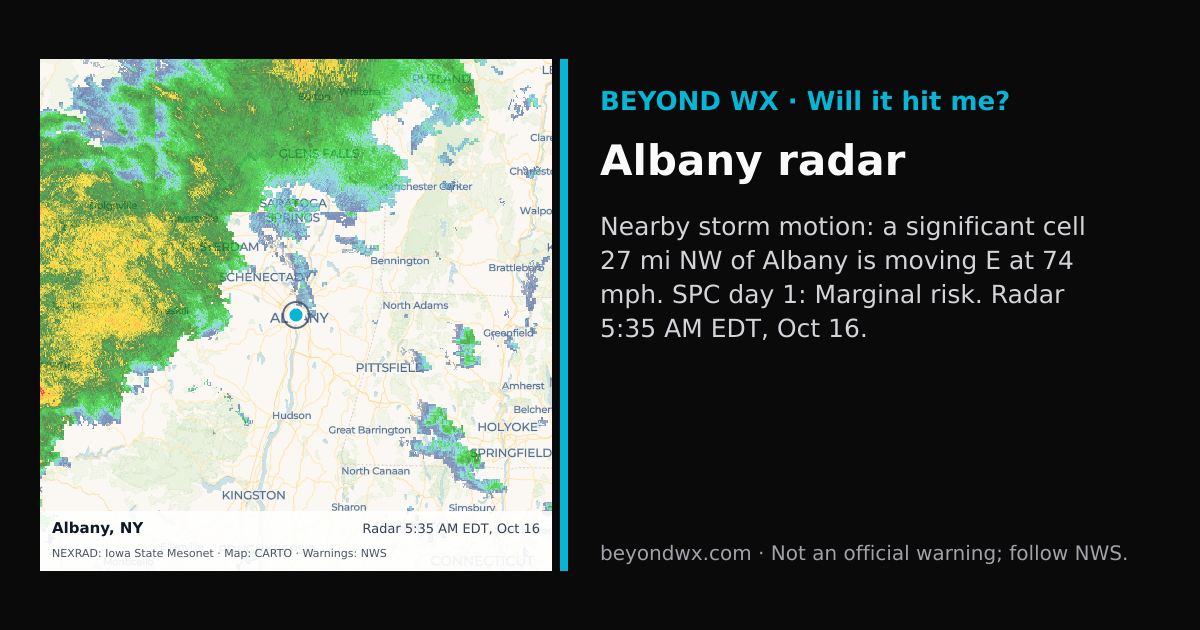
Chance Rain Showers
Data: NOAA/National Weather Service. Forecast updated Oct 16, 2026, 6:36 AM UTC. Discussion issued Oct 15, 2026, 11:23 PM UTC.
Air Quality Index: 20 (Good)
SPC Convective Outlook: Marginal Risk
Rain starts around 5:00 AM.
No storms on track toward Albany right now.
Hourly NWS forecast and radar storm motion. Times are local. Not an official warning; follow NWS.
Share: storm card image · live radar
Albany, NY, classified under the humid continental climate, experiences four distinct seasons with significant temperature variations and precipitation throughout the year. In this region, residents witness cold, snowy winters and warm, humid summers, typical of the northeastern United States. The region's climate is marked by its relative proximity to the Atlantic Ocean and the Great Lakes, albeit with reduced maritime influences due to its inland location.
During summer, Albany sees average high temperatures ranging from the mid-70s to the mid-80s Fahrenheit, while winter lows can plummet into the teens, with highs often staying below freezing. Spring and fall are transitional seasons, with spring temperatures gradually warming from the 40s to 60s, and fall cooling from the 60s to the 40s, offering a colorful and dynamic climate shift.
Albany receives approximately 39 inches of precipitation annually, with May being the wettest month. Snow is a significant feature, especially from November through March, culminating in an average snowfall of about 60 inches per winter. February often stands out as the driest month, despite still being in the core snow season.
Notable weather phenomena affecting Albany include the occasional Nor'easter, which can bring heavy snow and strong winds during winter months. While not directly prone to hurricanes, remnants of tropical systems can occasionally bring heavy rain. The city's elevation, approximately 200 feet above sea level, and location in the Hudson Valley contribute to its varied weather patterns, with mountains to the north and west influencing wind and precipitation trends.