42°F
Chance Light Rain
Data: NOAA/National Weather Service. Forecast updated Oct 16, 2026, 5:42 AM UTC. Discussion issued Oct 16, 2026, 12:47 AM UTC.
Air Quality Index: 32 (Good)
No rain expected in the next 2 hours.
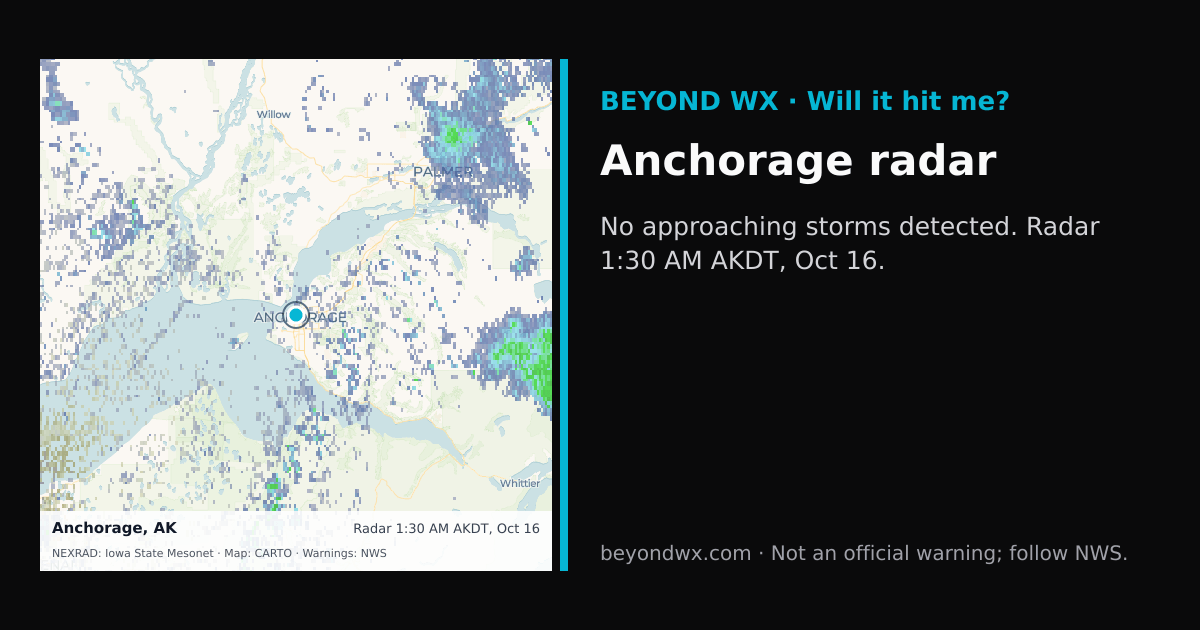
No storms on track toward Anchorage right now.
Hourly NWS forecast and radar storm motion. Times are local. Not an official warning; follow NWS.
Share: storm card image · live radar
Anchorage, AK, is classified under the subarctic climate category, characterized by long, cold winters and short, mild summers. This climate, known as Dfc under the Köppen classification, involves significant seasonal temperature variations and a relatively moderate amount of annual precipitation compared to other subarctic regions.
During the summer months, Anchorage experiences average high temperatures in the mid-60s to low 70s Fahrenheit, while daytime lows are typically in the mid-50s. In contrast, winter temperatures often range from highs in the low 20s to lows around 10°F, though colder spells are not uncommon. Spring and fall are transition periods with more moderate temperatures, as spring slowly thaws out the winter freeze and fall begins the cooling toward winter.
Annual precipitation in Anchorage is approximately 16 inches, with the wettest months being August and September. Snowfall is a significant feature of the Anchorage climate, with an average of around 80 inches of snow per year, primarily occurring from October through April. December and January are typically the snowiest months.
The region does not experience hurricanes or tornadoes, but it can be subject to strong winds, particularly in the Turnagain Arm area. Additionally, the long winter season means that snow and ice-related weather phenomena, such as ice fog and frost, are common.
Anchorage's climate is influenced by its location on the Cook Inlet and its proximity to the Chugach Mountains. The maritime influence from the inlet slightly moderates temperatures, while the surrounding mountains can create a rain shadow effect, contributing to the relatively low precipitation for a coastal area.