70°F
Partly Cloudy
Data: NOAA/National Weather Service. Forecast updated Oct 16, 2026, 7:56 PM UTC. Discussion issued Oct 16, 2026, 11:16 PM UTC.
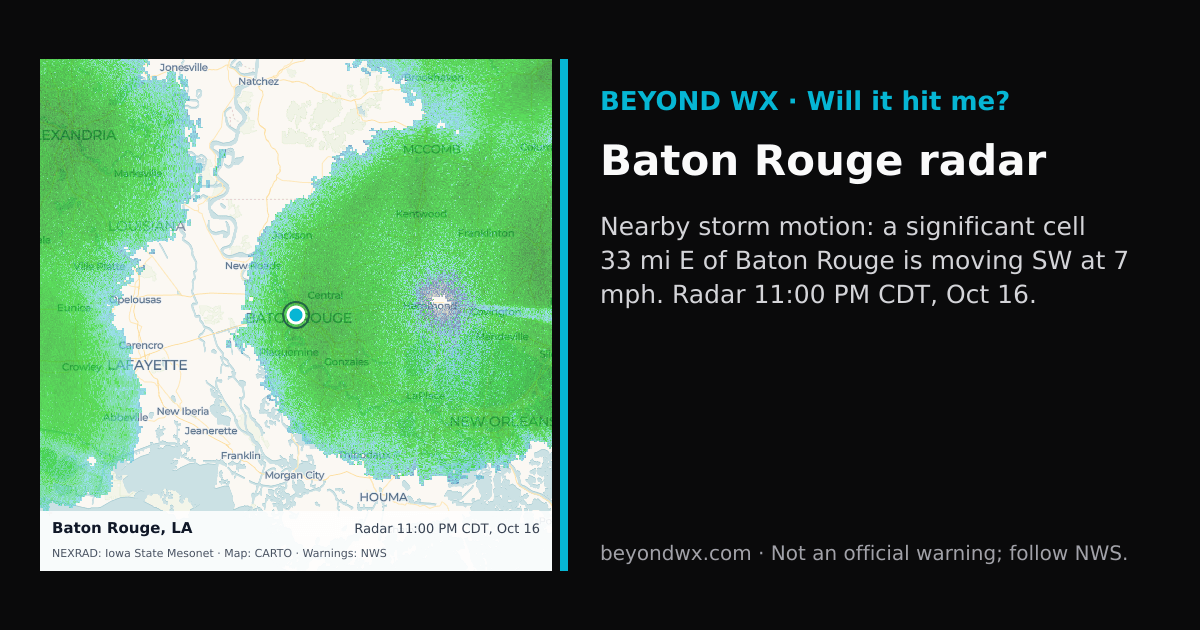
No storms on track toward Baton Rouge right now.
Hourly NWS forecast and radar storm motion. Times are local. Not an official warning; follow NWS.
Share: storm card image · live radar
Baton Rouge, Louisiana, falls under the humid subtropical climate classification, characterized by hot, humid summers and mild winters. This climate type is typical of the southeastern United States, where warm, moist air from the Gulf of Mexico heavily influences weather patterns. The city experiences a long growing season and frequent precipitation throughout the year.
In summer, Baton Rouge typically sees high temperatures ranging from the upper 80s to mid-90s°F, with lows in the mid-70s°F. Winters are relatively mild, with high temperatures in the 60s°F and lows in the 40s°F. Spring and fall serve as transitional periods, with spring bringing warming temperatures and fall offering a gradual cooling, both maintaining moderate conditions.
Annual rainfall in Baton Rouge averages around 60 inches, with the wettest months generally from June to August, coinciding with the peak hurricane season. January is often the driest month, though rainfall is fairly evenly distributed throughout the year. Snowfall is rare, and when it does occur, it is typically light.
Baton Rouge is susceptible to hurricanes and tropical storms due to its proximity to the Gulf of Mexico. These systems can bring heavy rainfall, strong winds, and flooding. The region is also at risk for severe thunderstorms, which can occasionally produce tornadoes, primarily in the spring and early summer months.
The city's low elevation, approximately 56 feet above sea level, and its location near the Mississippi River contribute to its susceptibility to flooding. The surrounding flat terrain allows for the accumulation of water during heavy rain events, influencing the local weather patterns and climate resilience.