48°F
Clear
Data: NOAA/National Weather Service. Forecast updated Oct 16, 2026, 6:29 AM UTC. Discussion issued Oct 16, 2026, 5:55 AM UTC.
Air Quality Index: 31 (Good)
No rain expected in the next 2 hours.
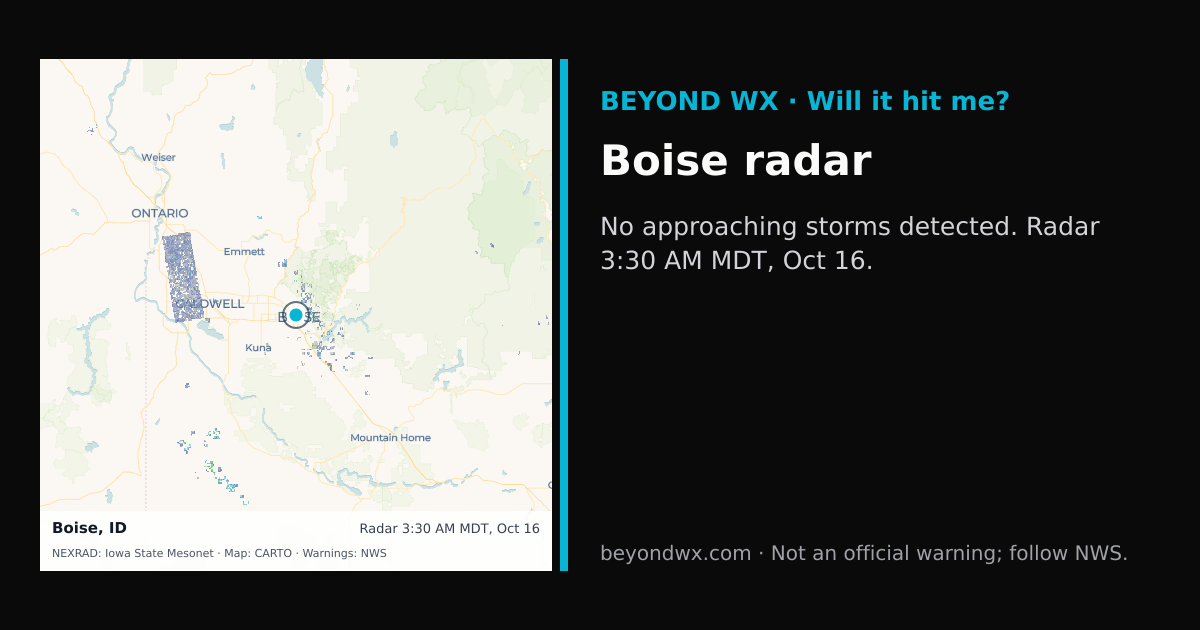
No storms on track toward Boise right now.
Hourly NWS forecast and radar storm motion. Times are local. Not an official warning; follow NWS.
Share: storm card image · live radar
Boise, ID, is classified as having a semi-arid climate (BSk) according to the Köppen climate classification. This classification is characterized by hot, dry summers and cold, moderately wet winters. The city is situated in the Treasure Valley, which contributes to its unique climate patterns influenced by surrounding mountains and its position in the Pacific Northwest.
Summer temperatures in Boise typically range from highs around 90°F to lows near 60°F, with July being the hottest month. Winter temperatures vary from highs in the upper 30s to lows in the mid-20s, with January being the coldest month. Spring and fall are transitional seasons with mild weather, with spring experiencing a gradual warming trend and fall seeing a cooling trend.
Boise receives an average annual precipitation of about 11.7 inches, with November through March being the wettest months, while July is usually the driest. Snowfall occurs primarily between December and February, averaging around 20 inches annually. Although precipitation is relatively low, the city does experience occasional heavy snowfalls and rainstorms.
Notable weather phenomena in the Boise area include the risk of wildfires, especially in the surrounding foothills and mountainous regions during the dry summer months. The region may also experience periods of extreme heat during summer, with temperatures occasionally exceeding 100°F. These conditions are often exacerbated by the semi-arid environment and the urban heat island effect.
Boise's geographic location and elevation at approximately 2,700 feet above sea level play significant roles in its climate. The nearby mountains can lead to temperature inversions, particularly in the winter, trapping cold air in the valley and contributing to fog and air quality issues. The city's position in the rain shadow of the Cascade Range results in its lower precipitation levels compared to regions further west.