46°F
Rain Showers Likely
Data: NOAA/National Weather Service. Forecast updated Oct 16, 2026, 6:21 AM UTC. Discussion issued Oct 15, 2026, 11:30 PM UTC.
Air Quality Index: 25 (Good)
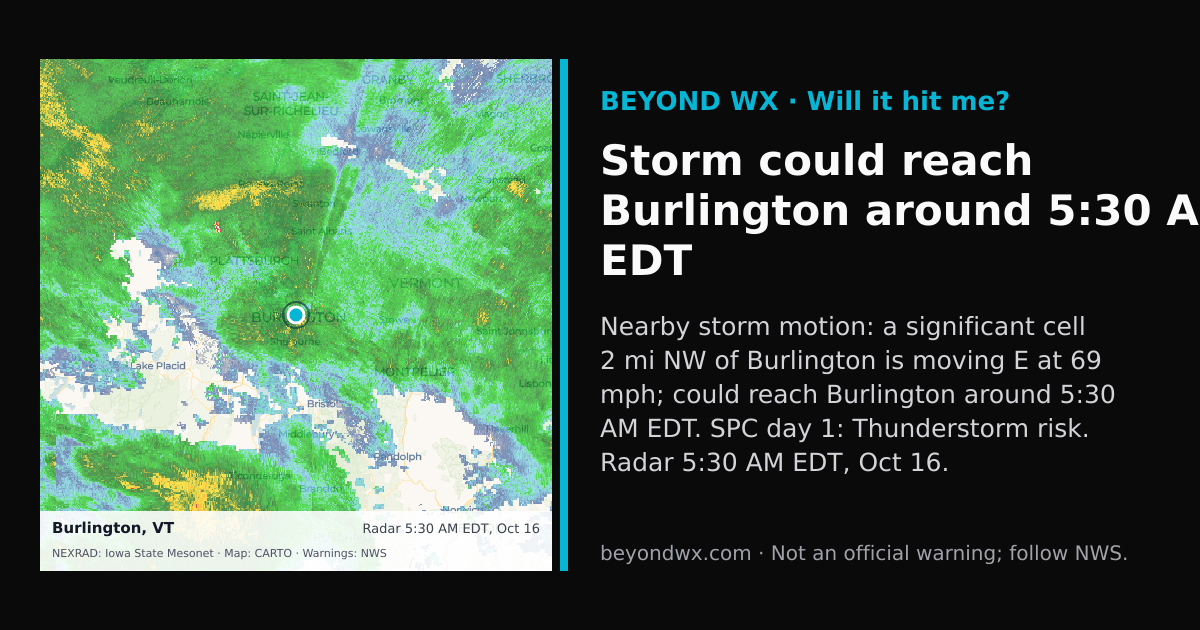
SPC Convective Outlook: Thunderstorm Risk
Rain likely now and through the next 2 hours.
Hourly NWS forecast and radar storm motion. Times are local. Not an official warning; follow NWS.
Share: storm card image · live radar
Burlington, VT, is classified as having a humid continental climate, characterized by cold winters and warm, humid summers. This climate type is typical for regions with distinct seasonal temperature variations, including significant differences between summer and winter conditions. Burlington's climate is influenced by its northern latitude and proximity to Lake Champlain, which can moderate temperatures slightly compared to inland areas.
In the summer, Burlington experiences average high temperatures around 80°F, with lows in the mid-60s. Winters are cold, with average highs in the mid-20s and lows often dipping into the single digits. Spring and fall serve as transitional seasons, with spring seeing gradual warming and fall bringing crisp, cooler air as temperatures drop from summer highs.
Annual precipitation in Burlington averages about 36 inches, with a fairly even distribution throughout the year. However, the months of June and July tend to be the wettest, while February is typically the driest. Snowfall is significant, with Burlington receiving an average of about 75 inches of snow annually, making winter weather events a notable part of the climate.
Burlington is not prone to extreme weather phenomena like tornadoes or hurricanes, but it can experience ice storms, particularly during late fall and winter. The influence of Lake Champlain can lead to lake-effect precipitation, although this is less intense than in regions downwind of the Great Lakes.
Situated at an elevation of about 330 feet above sea level and adjacent to Lake Champlain, Burlington's weather is influenced by the lake's presence, which can moderate extreme temperatures and contribute to localized weather patterns. The surrounding Green Mountains also play a role in shaping local weather, particularly in terms of precipitation and wind patterns.