68°F
Mostly Clear
Data: NOAA/National Weather Service. Forecast updated Oct 16, 2026, 6:23 AM UTC. Discussion issued Oct 16, 2026, 5:44 AM UTC.
Air Quality Index: 59 (Moderate)
No rain expected in the next 2 hours.
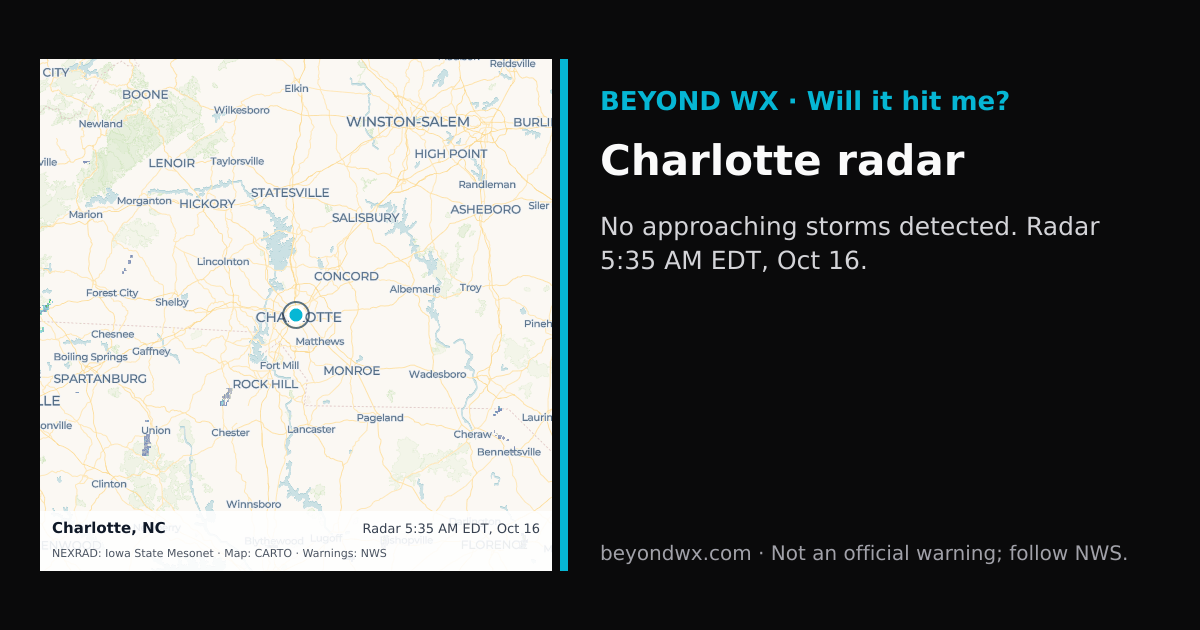
No storms on track toward Charlotte right now.
Hourly NWS forecast and radar storm motion. Times are local. Not an official warning; follow NWS.
Share: storm card image · live radar
Charlotte, NC, is classified as having a humid subtropical climate, characterized by hot, humid summers and mild to cool winters. The city's climate is influenced by its geographic location in the southeastern United States, away from coastal moderating effects, which contributes to its distinct seasonal variations.
In the summer, Charlotte experiences average high temperatures in the upper 80s to low 90s Fahrenheit, with lows in the upper 60s to low 70s. Winters are generally mild, with average highs in the low 50s and lows around the low 30s. Spring and fall are transitional seasons, offering moderate temperatures with highs typically in the 60s to 70s and lows in the 40s to 50s, making these seasons particularly pleasant.
The city receives about 43 inches of rainfall annually, with March being the wettest month. Rainfall is relatively well-distributed throughout the year, though drier periods can occur in the fall. Snowfall is infrequent, averaging about 2 inches per year, primarily occurring during occasional winter storms.
Charlotte is susceptible to notable weather phenomena, including the remnants of Atlantic hurricanes that can bring heavy rain and winds in late summer and early fall. Severe thunderstorms are common in the warmer months, occasionally producing tornadoes. Winter may bring rare ice storms, which can disrupt local infrastructure.
The city's elevation is approximately 750 feet above sea level, located in the Piedmont region between the Appalachian Mountains and the Atlantic Coastal Plain. This geographic setting influences Charlotte's weather patterns, providing a buffer against extreme coastal weather while still allowing for significant seasonal variability.