45°F
Sunny
Data: NOAA/National Weather Service. Forecast updated Oct 18, 2026, 6:26 AM UTC. Discussion issued Oct 18, 2026, 12:05 AM UTC.
Air Quality Index: 19 (Good)
No rain expected in the next 2 hours.
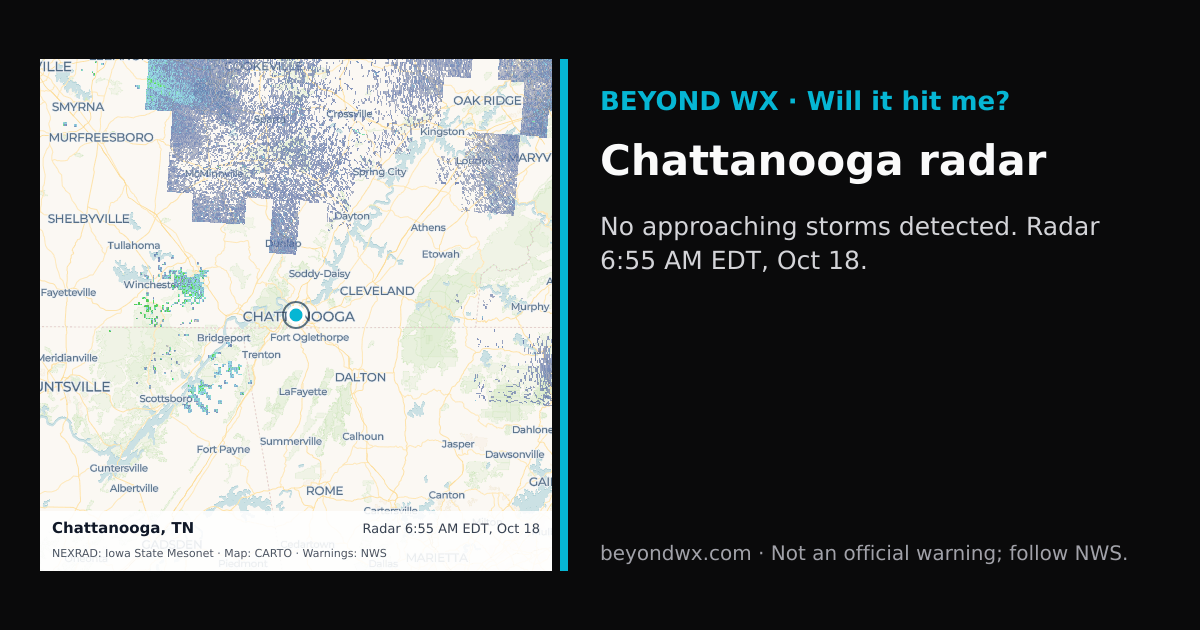
No storms on track toward Chattanooga right now.
Hourly NWS forecast and radar storm motion. Times are local. Not an official warning; follow NWS.
Share: storm card image · live radar
Chattanooga, TN, located at 35.0456°N, -85.3097°W, experiences a humid subtropical climate characterized by hot, humid summers and mild winters. This climate type typically involves significant precipitation throughout the year and distinct seasonal temperature variations.
During the summer, temperatures in Chattanooga often reach highs in the upper 80s to low 90s Fahrenheit, with overnight lows typically in the mid-60s to low 70s. Winters are relatively mild, with average high temperatures in the upper 40s to low 50s and lows in the 30s. Spring and fall offer moderate temperatures, with spring highs in the 60s to 70s and fall highs ranging from the 60s to 80s.
Chattanooga receives an average annual rainfall of around 50 inches. The wettest months are generally March and April, while the driest tends to be October. Snowfall is infrequent, with only about 3 inches of snow per year, primarily occurring in January or February.
Notable weather phenomena in the area include occasional severe thunderstorms and the potential for tornadoes, particularly in the spring. Although not in a primary hurricane zone, remnants of tropical systems can bring heavy rainfall. Ice storms are possible in winter, but they are not common.
Chattanooga's location in the Tennessee Valley, surrounded by mountains, influences its climate. The nearby Appalachian Mountains can affect weather patterns, contributing to precipitation variability and occasionally trapping cold air, leading to cooler temperatures than surrounding areas.