56°F
Cloudy
Data: NOAA/National Weather Service. Forecast updated Oct 16, 2026, 8:26 AM UTC. Discussion issued Oct 16, 2026, 5:26 AM UTC.
Air Quality Index: 9 (Good)
No rain expected in the next 2 hours.
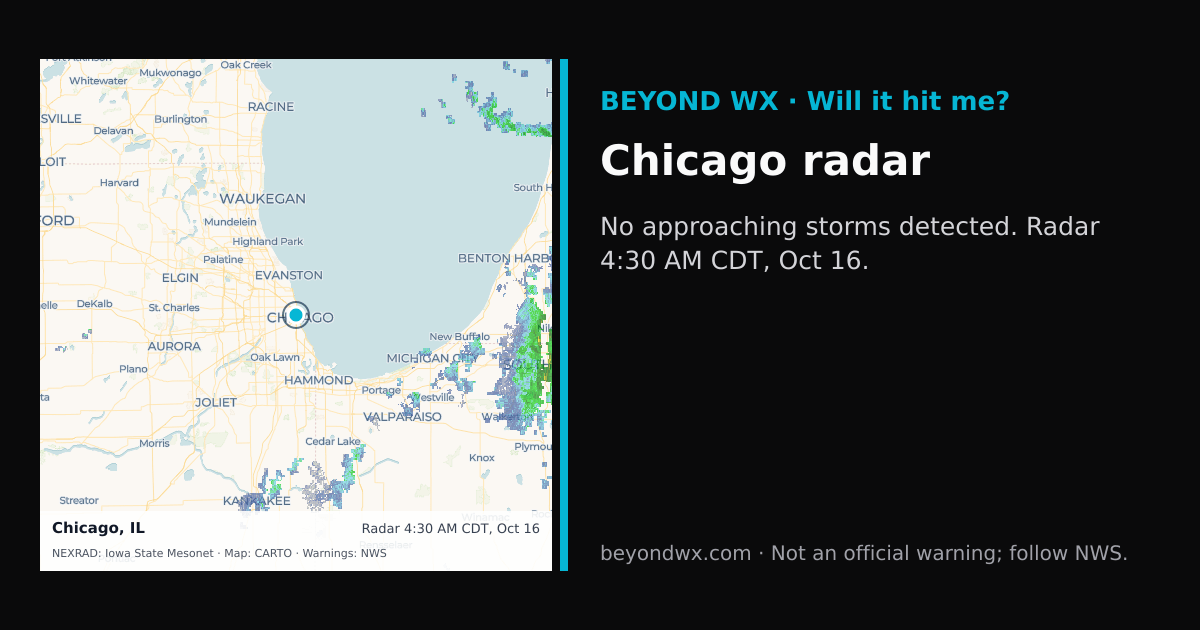
No storms on track toward Chicago right now.
Hourly NWS forecast and radar storm motion. Times are local. Not an official warning; follow NWS.
Share: storm card image · live radar
Chicago, Illinois, is classified under the humid continental climate zone, characterized by distinct seasons with a wide range of temperatures. Summers are typically warm and humid, while winters can be cold and snowy, influenced by its proximity to Lake Michigan. This climate type leads to hot summers with average highs in the mid-80s°F, and winters that can be quite harsh, with temperatures often dropping to the mid-20s°F.
Seasonal temperature variations in Chicago are pronounced, with spring and fall offering milder conditions. Spring sees gradual warming with highs from the 50s to 70s°F, while autumn cools down from the 70s to 50s°F. Winter is notably cold, with average lows frequently in the teens, and summer nights are relatively cooler with lows in the mid-60s°F.
Chicago receives about 36 inches of precipitation annually, with May being the wettest month. Rainfall is fairly evenly distributed throughout the year, though drier periods can occur in winter. Snowfall is significant, averaging about 36 inches per year, with January and February being the snowiest months.
The city occasionally experiences severe weather, such as thunderstorms during the warmer months, which can bring heavy rain, strong winds, and even tornadoes. Lake Michigan plays a crucial role in moderating temperatures and can lead to lake effect snow, particularly in the winter. Chicago’s low elevation, at around 600 feet above sea level, and its urban heat island effect also influence local weather patterns, contributing to temperature fluctuations.