71°F
Slight Chance Rain Showers
Data: NOAA/National Weather Service. Forecast updated Oct 16, 2026, 4:28 AM UTC. Discussion issued Oct 16, 2026, 4:57 AM UTC.
Air Quality Index: 53 (Moderate)
Rain starts around 6:00 AM.
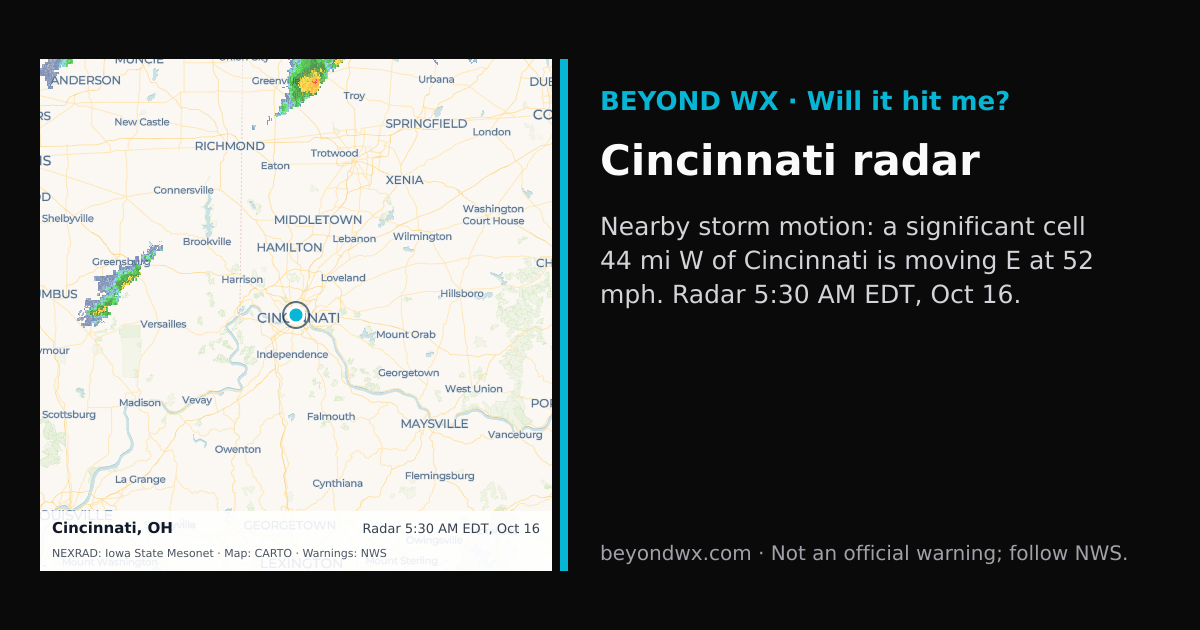
No storms on track toward Cincinnati right now.
Hourly NWS forecast and radar storm motion. Times are local. Not an official warning; follow NWS.
Share: storm card image · live radar
Cincinnati, Ohio, is classified as having a humid continental climate, characterized by four distinct seasons with significant temperature variations. It experiences hot, humid summers and cold winters. The city is positioned away from oceanic influences, leading to more extreme temperature contrasts.
During the summer months, Cincinnati typically sees high temperatures ranging from the mid-80s to the low 90s (°F), while lows usually fall into the mid-60s. Winter temperatures often range from highs in the upper 30s to low 40s, with lows dropping into the mid-20s. Spring and fall are transitional seasons, with spring highs in the 60s and 70s and fall temperatures cooling down from the 70s to the 50s.
Annual precipitation in Cincinnati averages around 42 inches, with May being the wettest month, receiving over 5 inches on average, while February is typically the driest, with just over 2.5 inches. Snowfall occurs primarily from December through March, accumulating to about 22 inches annually, with January usually seeing the highest snowfall.
Cincinnati is occasionally affected by severe weather phenomena, including thunderstorms and tornadoes due to its location in the Midwest. Ice storms can occur in winter, leading to hazardous conditions. The city does not face risks from hurricanes or wildfires, given its distance from the coast and forested areas.
Situated along the Ohio River at an elevation of approximately 482 feet, Cincinnati's weather is influenced by its river valley location, which can result in localized fog and can amplify temperature extremes, contributing to the overall variability in its climate.