69°F
Chance Showers And Thunderstorms
Data: NOAA/National Weather Service. Forecast updated Oct 16, 2026, 7:46 AM UTC. Discussion issued Oct 16, 2026, 5:56 AM UTC.
Air Quality Index: 52 (Moderate)
Rain starts around 6:00 AM.
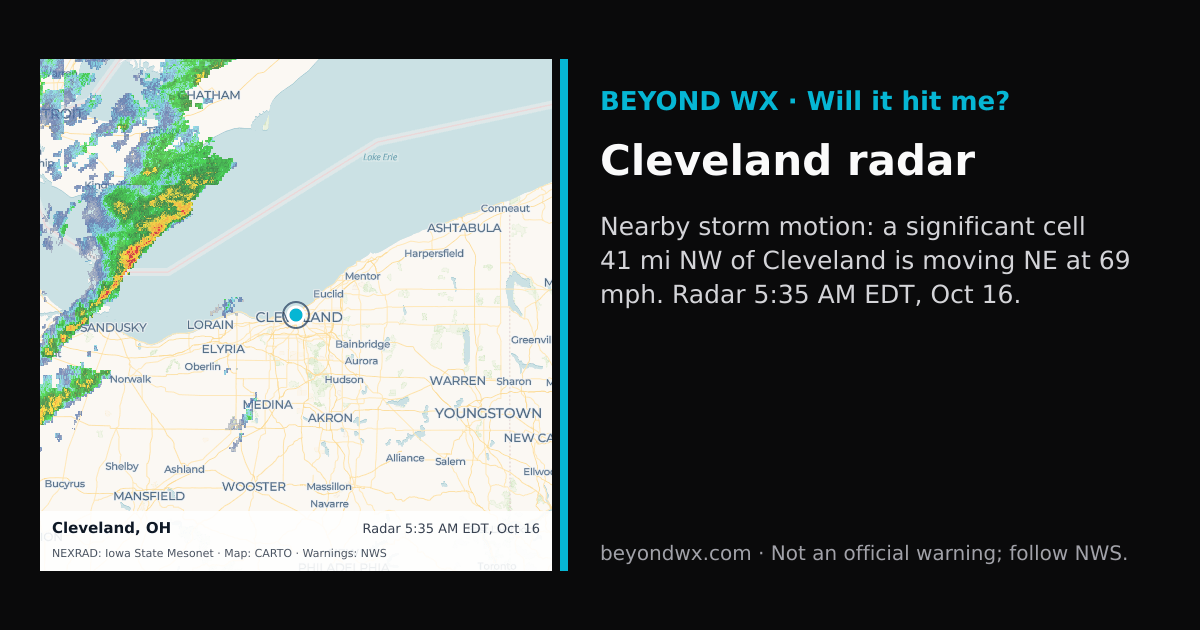
No storms on track toward Cleveland right now.
Hourly NWS forecast and radar storm motion. Times are local. Not an official warning; follow NWS.
Share: storm card image · live radar
Cleveland, Ohio, is classified under the humid continental climate category, characterized by four distinct seasons, including warm summers and cold, snowy winters. This climate results from its position in the northern Midwest of the United States, influenced by Lake Erie.
During the summer months, temperatures typically range from highs in the low 80s°F to lows in the mid-60s°F. Winters are cold, with average highs in the mid-30s°F and lows dipping into the low 20s°F. Spring and fall serve as transitional periods, with temperatures gradually shifting between the extremes of summer and winter.
Cleveland receives an average annual precipitation of around 39 inches, with the wettest months being May and June. Snowfall is significant, influenced heavily by lake effect snow, with an average of around 68 inches of snow each winter. This lake effect is most pronounced in November and December, contributing to Cleveland's reputation for heavy winter snowfall.
Lake effect snow is the most notable weather phenomenon in Cleveland, driven by cold air passing over the warmer waters of Lake Erie. This results in heavy, localized snowfall, particularly to the east of the city. Cleveland's proximity to the lake also tempers extreme temperatures somewhat, though it does not eliminate the risk of occasional ice storms or heatwaves. The city's relatively low elevation and flat geography mean that these lake-driven effects are a dominant influence on its weather patterns.