35°F
Clear
Data: NOAA/National Weather Service. Forecast updated Oct 16, 2026, 6:31 AM UTC. Discussion issued Oct 16, 2026, 4:59 AM UTC.
Air Quality Index: 28 (Good)
No rain expected in the next 2 hours.
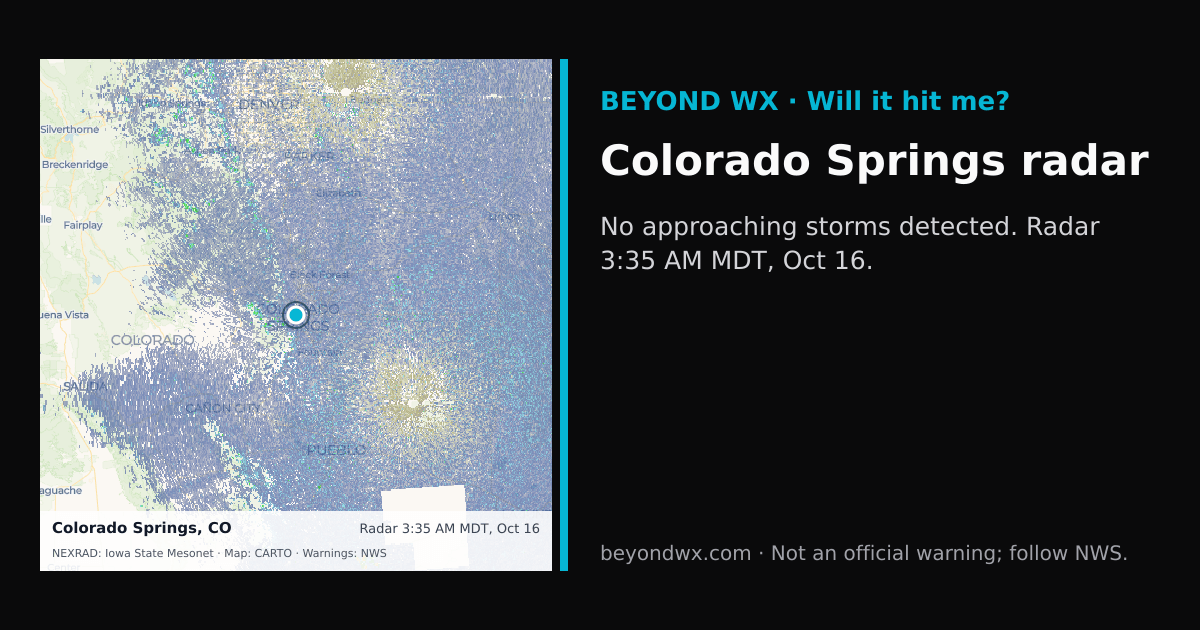
No storms on track toward Colorado Springs right now.
Hourly NWS forecast and radar storm motion. Times are local. Not an official warning; follow NWS.
Share: storm card image · live radar
Colorado Springs, Colorado, is classified as having a semi-arid climate, characterized by relatively dry conditions and significant temperature variations between seasons. Located at an elevation of approximately 6,035 feet, the city experiences cooler temperatures than lower elevation areas at similar latitudes. Summers are warm with average high temperatures in the mid-80s°F, while overnight lows typically drop to the mid-50s°F. Winters are cold, with average highs in the low 40s°F, and lows often dipping into the teens. Spring and fall are transitional, with mild temperatures ranging from the 50s°F to 70s°F during the day.
Annual precipitation in Colorado Springs averages about 16 inches, with the wettest months being May and June, where thunderstorms are more frequent. The driest months are typically January and February. The city receives around 39 inches of snow annually, mostly from December through March, contributing to the overall precipitation and impacting local conditions.
Colorado Springs is not prone to tornadoes or hurricanes but does experience occasional severe thunderstorms, especially during the late spring and early summer months. The region is susceptible to wildfires, particularly in the hot, dry summer months. The city's high elevation and proximity to the Rocky Mountains influence its weather, with rapid weather changes and strong winds being common due to mountain-induced atmospheric conditions. The elevation also contributes to cooler temperatures and increased snowfall compared to lower regions in the state.