65°F
Rain Showers Likely
Data: NOAA/National Weather Service. Forecast updated Oct 16, 2026, 6:26 AM UTC. Discussion issued Oct 16, 2026, 5:25 AM UTC.
Air Quality Index: 17 (Good)
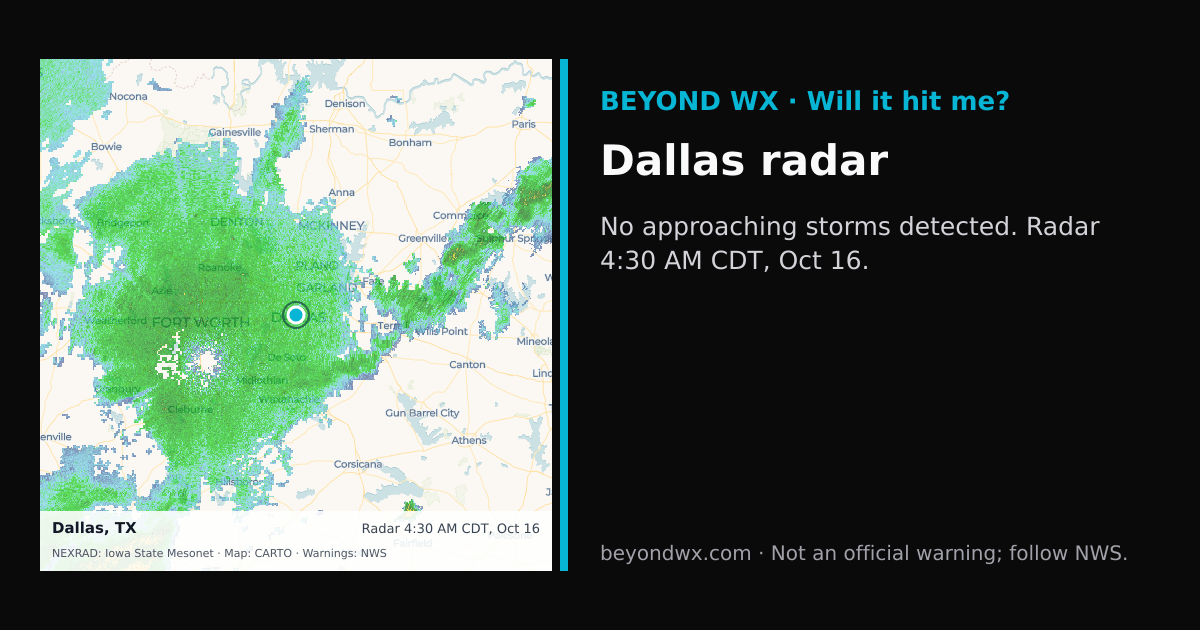
Rain likely now, easing around 4:00 AM.
Hourly NWS forecast and radar storm motion. Times are local. Not an official warning; follow NWS.
Share: storm card image · live radar
Dallas, TX, located at 32.7767°N, 96.7970°W, experiences a humid subtropical climate characterized by hot summers and mild to cool winters. The city's climate is influenced by its position in the southern Great Plains, leading to significant temperature variations and weather phenomena typical of this region.
Summers in Dallas are typically hot, with average high temperatures in July and August reaching around 96°F, while lows hover near 76°F. Winters are mild, with January highs averaging around 57°F and lows near 37°F. Spring and fall are transitional seasons, offering moderate temperatures with highs ranging from the 60s to 80s and lows from the 40s to 60s.
Dallas receives an average annual rainfall of approximately 39 inches, with May being the wettest month, averaging about 5 inches of rain. The driest months are typically July and August, with rainfall often below 2 inches. Snowfall is rare but can occur, with an average of about 1.2 inches per year.
The city is situated near the southern edge of Tornado Alley, making it susceptible to severe thunderstorms and tornadoes, particularly during the spring. Additionally, Dallas can experience extreme heat during summer and occasional ice storms in winter. The combination of flat terrain and proximity to the Gulf of Mexico allows for dynamic weather systems to influence the area.
Dallas's relatively low elevation and flat geography allow for minimal geographic barriers to weather patterns, facilitating the rapid movement of air masses and contributing to the city's variable weather. The urban heat island effect can also exacerbate summer heat in the metropolitan area.