40°F
Mostly Clear
Data: NOAA/National Weather Service. Forecast updated Oct 16, 2026, 6:46 AM UTC. Discussion issued Oct 15, 2026, 11:21 PM UTC.
Air Quality Index: 24 (Good)
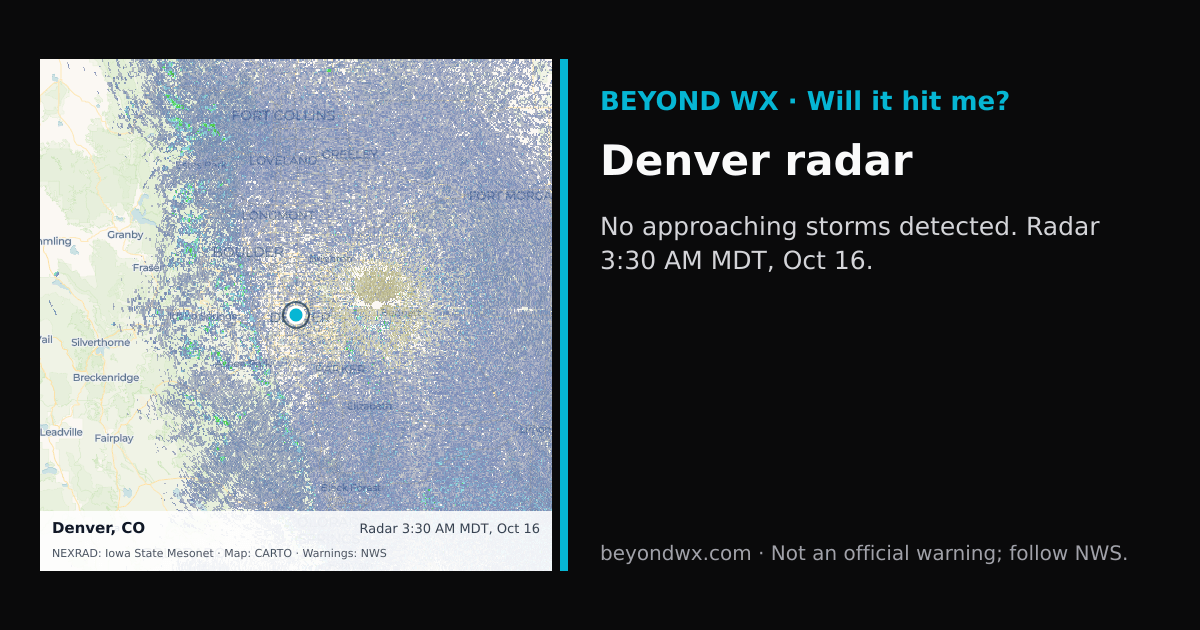
No rain expected in the next 2 hours.
No storms on track toward Denver right now.
Hourly NWS forecast and radar storm motion. Times are local. Not an official warning; follow NWS.
Share: storm card image · live radar
Denver, Colorado, is classified as having a semi-arid continental climate, characterized by its high elevation and proximity to the Rocky Mountains. This results in significant temperature variations and generally dry conditions. Located at an elevation of about 5,280 feet, Denver experiences distinct seasonal changes with a wide range of temperatures.
In the summer, temperatures typically range from highs in the mid-80s°F to lows in the mid-50s°F. Winters can be cold with average highs in the mid-40s°F and lows in the low 20s°F. Spring and fall are transitional seasons, with spring bringing warmer temperatures and fall marked by cooler weather, often with rapid changes from day to day.
Denver receives an average annual precipitation of approximately 15 inches, with the wettest months being May and August. Snowfall is a significant component of Denver's precipitation, averaging around 55 inches per year, primarily occurring from November through March. March often sees the heaviest snowfalls, while July is typically the driest month.
The region is susceptible to severe weather conditions such as thunderstorms, which can occasionally produce hail and tornadoes, although tornadoes are more common on the Eastern Plains. The high altitude and mountainous terrain contribute to rapid changes in weather conditions and can lead to intense but brief weather events.
Denver's location on the western edge of the High Plains and its elevation influence its weather patterns significantly. The city is known for its sunny climate, receiving over 300 days of sunshine annually, which is often contrasted by sudden and intense weather changes due to its proximity to the Rockies.