80°F
Slight Chance Rain Showers
Data: NOAA/National Weather Service. Forecast updated Oct 16, 2026, 7:46 AM UTC. Discussion issued Oct 16, 2026, 5:34 AM UTC.
Air Quality Index: 18 (Good)
SPC Convective Outlook: Thunderstorm Risk
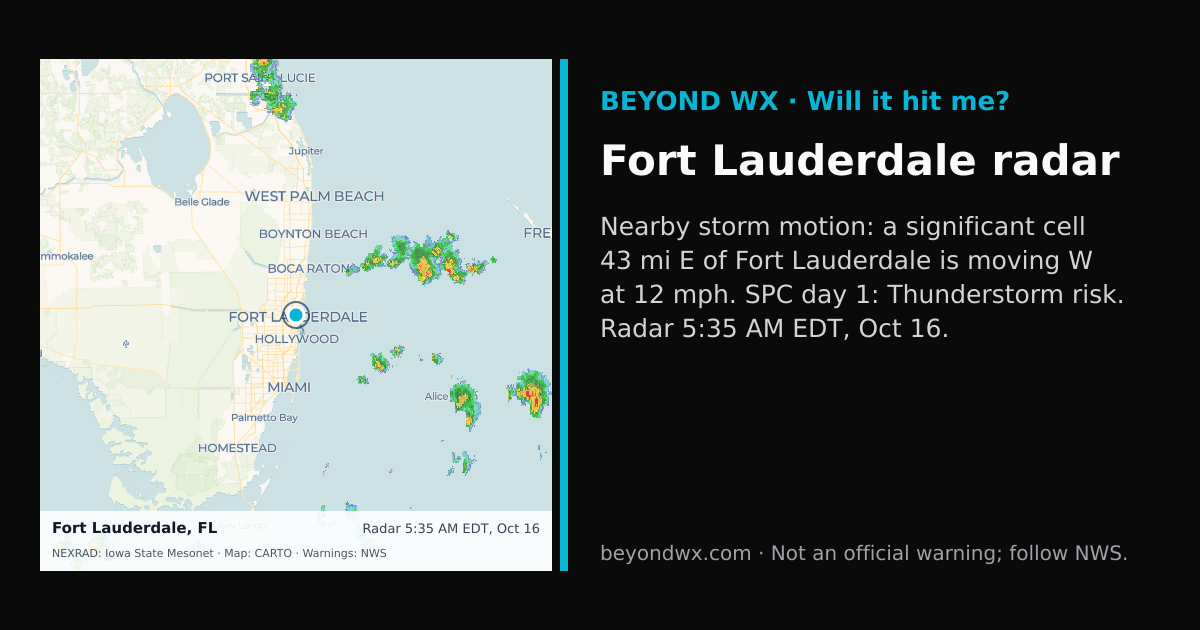
No rain expected in the next 2 hours.
Hourly NWS forecast and radar storm motion. Times are local. Not an official warning; follow NWS.
Share: storm card image · live radar
Fort Lauderdale, FL, is classified as having a tropical rainforest climate (Köppen classification Af), characterized by warm temperatures and significant rainfall throughout the year. This coastal city experiences consistent warmth, with no true dry season, typical of its tropical latitude.
Summer temperatures in Fort Lauderdale range from highs around 89°F to lows near 76°F, while winter highs average about 76°F, with lows around 59°F. Spring and fall transition smoothly with temperatures often in the 70s and 80s, making these shoulder seasons mild and pleasant.
Annual rainfall in Fort Lauderdale is approximately 63 inches, with the wettest months occurring from June to September, coinciding with the Atlantic hurricane season. August typically sees the peak of rainfall. The driest period is usually from December through February, although even these months receive some precipitation. Snow is virtually unheard of in this coastal area.
Fort Lauderdale is notably affected by tropical weather phenomena, particularly hurricanes and tropical storms, due to its position along the Southeast Florida coast. The city faces a moderate to high risk of hurricane impacts during the Atlantic hurricane season, which runs from June 1 to November 30.
Situated at a low elevation and bordered by the Atlantic Ocean to the east, Fort Lauderdale's climate is heavily influenced by marine conditions. The proximity to the ocean helps moderate temperatures and contributes to the high humidity and precipitation levels experienced in the region.