66°F
Chance Rain Showers
Data: NOAA/National Weather Service. Forecast updated Oct 16, 2026, 7:45 AM UTC. Discussion issued Oct 16, 2026, 5:25 AM UTC.
Air Quality Index: 32 (Good)
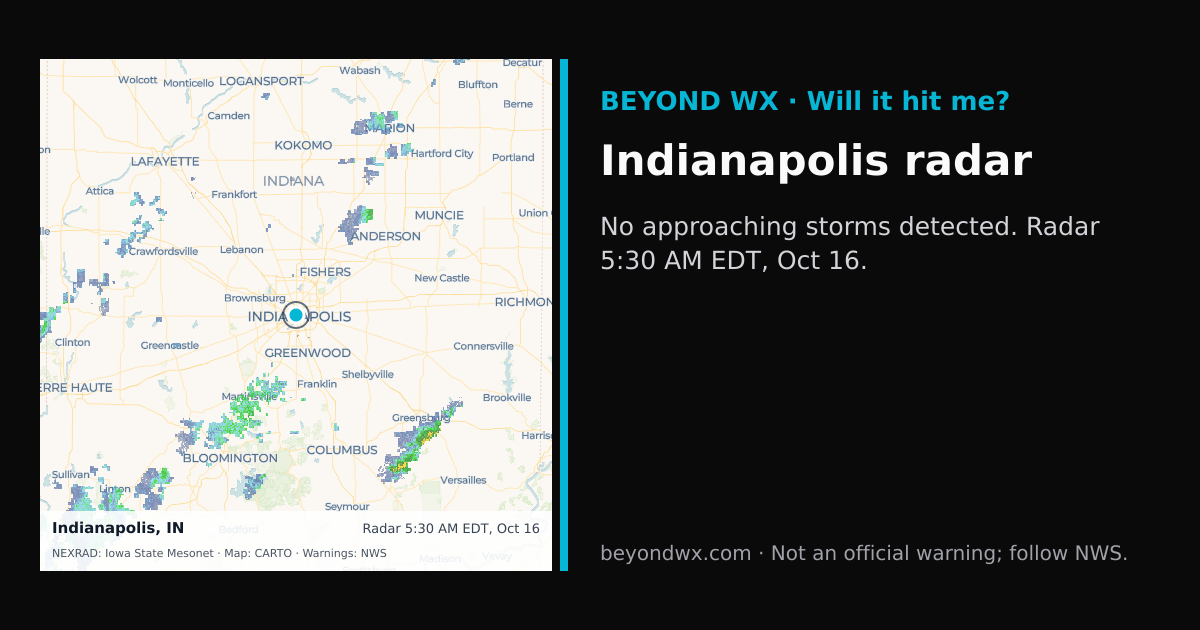
No rain expected in the next 2 hours.
No storms on track toward Indianapolis right now.
Hourly NWS forecast and radar storm motion. Times are local. Not an official warning; follow NWS.
Share: storm card image · live radar
Indianapolis, Indiana, is classified under the humid continental climate category, characterized by distinct seasonal temperature variations and moderate precipitation. This climate type experiences warm summers and cold winters, with notable transitions in spring and fall. Located in the Midwest, Indianapolis's climate is influenced by its inland position away from large bodies of water.
During the summer months, average high temperatures in Indianapolis range from the mid-80s to low 90s Fahrenheit, while lows typically fall into the mid-60s. Winters are cold, with average highs in the mid-30s and lows often dipping into the low 20s. Spring and fall serve as transitional periods, with temperatures generally ranging from the 50s to 70s, offering mild and comfortable conditions.
Annual precipitation in Indianapolis averages around 42 inches, with May being the wettest month, receiving over 5 inches of rain. February is typically the driest month, with average precipitation just under 2 inches. Snowfall is a significant aspect of the winter months, contributing to an average of about 22 inches of snow annually, mostly falling between December and February.
Indianapolis occasionally experiences severe weather, particularly in the form of thunderstorms and tornadoes, as it lies on the periphery of Tornado Alley. Ice storms can also occur during the winter months, posing challenges for transportation and infrastructure. The city's elevation is approximately 718 feet above sea level, and its relatively flat topography allows for the unimpeded flow of weather systems across the region. This geographical setting contributes to the variability and intensity of weather patterns experienced in Indianapolis.