71°F
Patchy Fog
Data: NOAA/National Weather Service. Forecast updated Oct 16, 2026, 6:21 AM UTC. Discussion issued Oct 16, 2026, 5:40 AM UTC.
Air Quality Index: 26 (Good)
No rain expected in the next 2 hours.
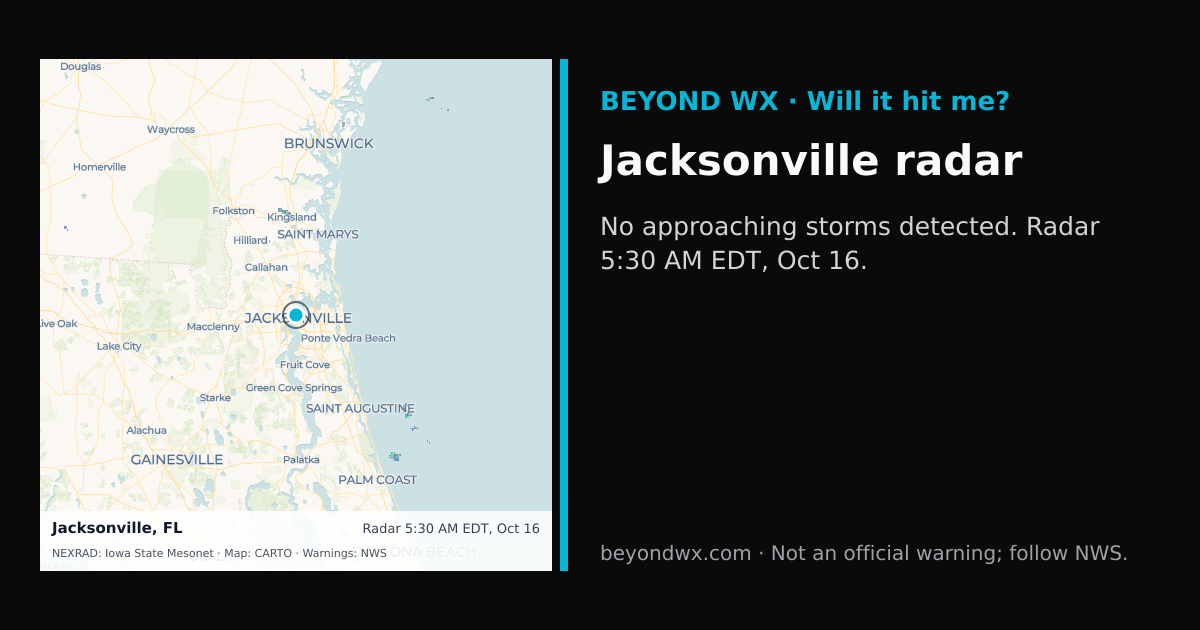
No storms on track toward Jacksonville right now.
Hourly NWS forecast and radar storm motion. Times are local. Not an official warning; follow NWS.
Share: storm card image · live radar
Jacksonville, FL, falls under the humid subtropical climate classification, characterized by hot, humid summers and mild winters. This climate type is typical for the southeastern United States and contributes to the city's lush vegetation and diverse ecosystems. The proximity to the Atlantic Ocean plays a significant role in moderating temperature extremes throughout the year.
During the summer months, Jacksonville experiences average high temperatures in the low 90s Fahrenheit, with lows in the mid-70s. Winters are mild, with average highs in the mid-60s and lows in the mid-40s. Spring and fall are transitional seasons, with temperatures ranging from the 60s to 80s, providing comfortable conditions for outdoor activities.
Jacksonville receives an average annual rainfall of approximately 52 inches. The wettest months are typically June through September, coinciding with the Atlantic hurricane season, while November and December tend to be the driest. Snowfall is extremely rare in Jacksonville, owing to its low latitude and proximity to the ocean.
The area is susceptible to hurricanes and tropical storms, given its location along the Atlantic Coast. While tornadoes are less common than in the central United States, they can occur, particularly when associated with tropical systems. The city is not affected by phenomena like lake effect snow or monsoons but does experience occasional extreme heat during the peak summer months.
Jacksonville's geographic context includes its position near sea level and proximity to the St. Johns River and Atlantic Ocean. These features influence local weather patterns by providing moisture and moderating temperature fluctuations, reducing the likelihood of severe cold spells in winter.