76°F
Mostly Clear
Data: NOAA/National Weather Service. Forecast updated Oct 16, 2026, 6:26 AM UTC. Discussion issued Oct 16, 2026, 5:56 AM UTC.
Air Quality Index: 21 (Good)
No rain expected in the next 2 hours.
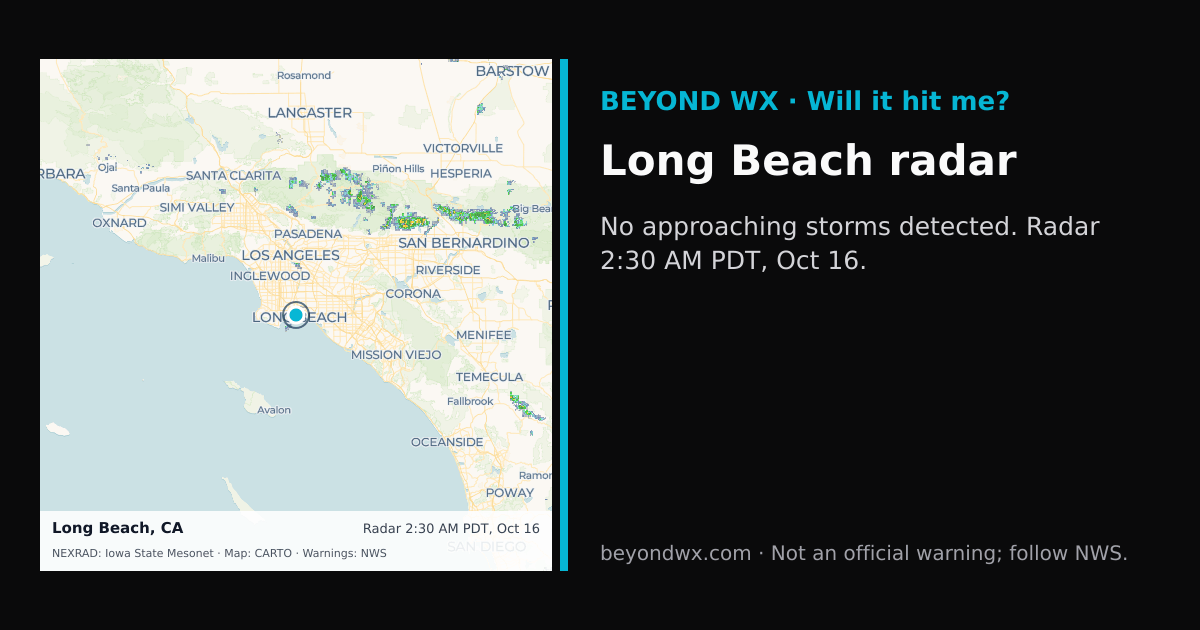
No storms on track toward Long Beach right now.
Hourly NWS forecast and radar storm motion. Times are local. Not an official warning; follow NWS.
Share: storm card image · live radar
Long Beach, CA, falls under the Mediterranean climate classification, characterized by warm, dry summers and mild, wet winters. This climate, typical of coastal Southern California, features a balance between oceanic influences and semi-arid conditions. The city's proximity to the Pacific Ocean plays a significant role in moderating temperatures year-round.
In summer, Long Beach experiences average high temperatures in the mid-70s to low 80s Fahrenheit, with lows typically in the mid-60s. Winters are mild, with high temperatures averaging in the mid-60s and lows in the upper 40s to low 50s. Spring and fall serve as transitional periods with gentle shifts in temperature, maintaining a comfortable climate for most of the year.
Annual precipitation in Long Beach averages around 12 to 14 inches, with the majority falling between November and March. February is usually the wettest month, while the summer months of June through September see minimal rainfall, often less than half an inch per month. Snow is virtually nonexistent due to the temperate climate and low elevation.
Long Beach is not prone to extreme weather phenomena like hurricanes or tornadoes, but it does experience occasional Santa Ana winds, which can lead to elevated wildfire risks in the surrounding areas. These dry, warm winds typically occur during the fall and winter months and can significantly increase temperatures and decrease humidity.
Located at a low elevation near sea level and adjacent to the Pacific Ocean, Long Beach's weather is heavily influenced by maritime conditions, leading to relatively stable temperatures and moderate weather patterns. The coastal mountains to the north and east provide some protection from inland heatwaves and contribute to the overall mild climate.