83°F
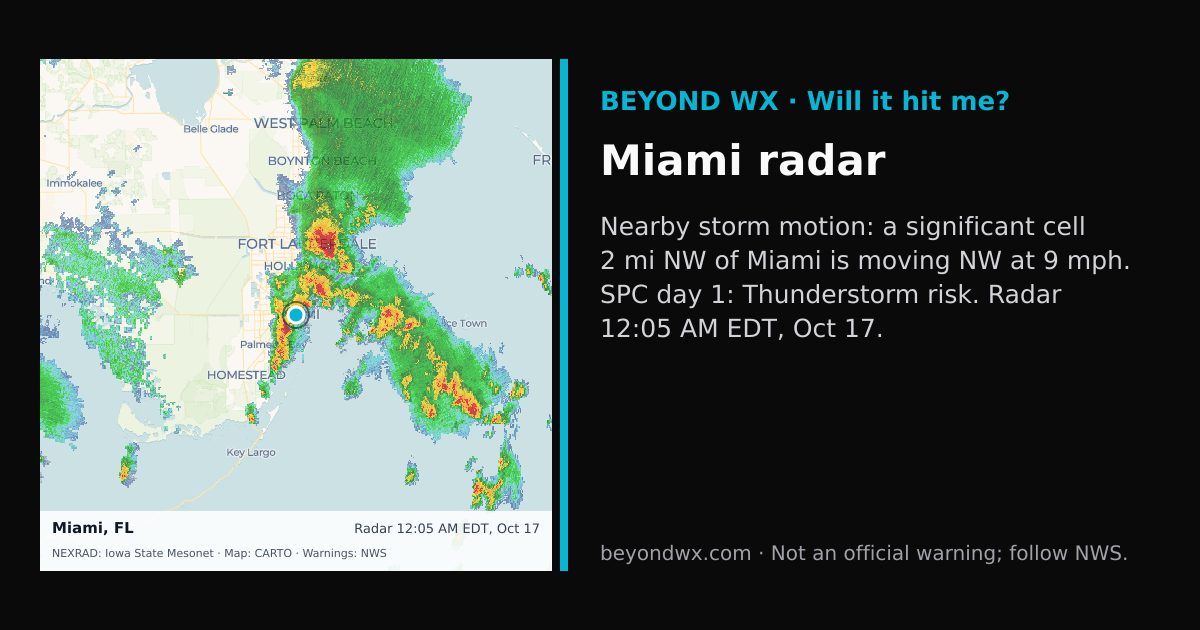
Chance Showers And Thunderstorms
Data: NOAA/National Weather Service. Forecast updated Oct 16, 2026, 8:32 PM UTC. Discussion issued Oct 16, 2026, 10:42 PM UTC.
SPC Convective Outlook: Thunderstorm Risk
Hourly NWS forecast and radar storm motion. Times are local. Not an official warning; follow NWS.
Share: storm card image · live radar
Miami, FL, located at 25.7617°N, 80.1918°W, has a tropical monsoon climate characterized by warm and humid conditions throughout the year. This classification results in distinct wet and dry seasons, with temperatures remaining relatively stable compared to more temperate regions. The city experiences long, hot summers and short, mild winters, with a clear influence from the surrounding Atlantic Ocean and the Gulf of Mexico.
During summer, Miami's temperatures typically range from highs around 89-91°F to lows near 77-79°F. In winter, the highs are generally between 76-79°F, with lows ranging from 59-63°F. Spring and fall serve as transitional periods with moderate temperatures, maintaining the overall warmth of the region.
Miami receives an annual average rainfall of about 61.9 inches. The wet season spans from May to October, with June being the wettest month, often receiving over 9 inches of rain. The dry season lasts from November to April, with February being the driest month, receiving less than 2 inches. Snowfall is virtually nonexistent in Miami, given its tropical climate.
The region is notably at risk for hurricanes, particularly from June through November. Its low elevation and proximity to warm ocean waters make Miami susceptible to tropical storms and hurricanes, which can bring heavy rain, strong winds, and storm surge. Miami's coastal geography, combined with its low-lying topography, plays a significant role in its weather patterns, providing both the moisture and warmer temperatures that define its climate.