36°F
Areas Of Frost
Data: NOAA/National Weather Service. Forecast updated Oct 16, 2026, 8:01 AM UTC. Discussion issued Oct 15, 2026, 6:33 PM UTC.
Air Quality Index: 17 (Good)
No rain expected in the next 2 hours.
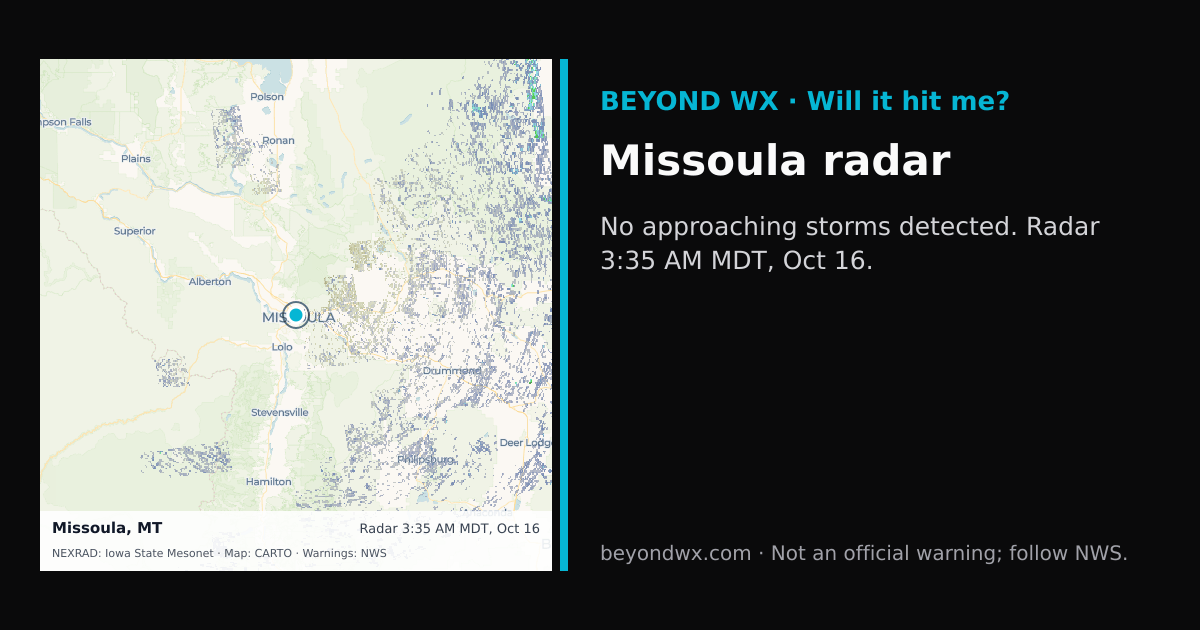
No storms on track toward Missoula right now.
Hourly NWS forecast and radar storm motion. Times are local. Not an official warning; follow NWS.
Share: storm card image · live radar
Missoula, Montana, is characterized by a humid continental climate, which features significant seasonal temperature variations and generally moderate precipitation. Situated in the northern Rocky Mountains, Missoula experiences cold, snowy winters and warm, dry summers. The city's climate is influenced by its elevation of approximately 3,200 feet and its location in a valley surrounded by mountain ranges.
During the summer months, Missoula typically sees daytime high temperatures reaching the mid-80s°F, while nighttime lows can dip into the mid-40s°F. Winters are cold, with average highs in the low to mid-30s°F and lows often falling into the teens. The transitional seasons of spring and fall bring milder temperatures, with spring highs ranging from the 50s to 60s°F and fall highs starting in the 60s°F, gradually cooling to the 40s°F.
Missoula receives an annual average of about 14 inches of precipitation, with June being the wettest month. Snowfall is a significant part of the climate, with an annual average of around 40 inches, primarily from November to March. February and March are typically the snowiest months, while July is the driest.
Notable weather phenomena in Missoula include the potential for wildfires during the dry summer months, which can lead to poor air quality and visibility. The region's mountainous terrain can also result in rapid weather changes and localized weather effects, such as valley inversions in winter that trap cold air and fog. Missoula's geographic position in a mountain valley influences its microclimate, contributing to cooler temperatures and varied precipitation patterns compared to surrounding areas.