72°F
Mostly Clear
Data: NOAA/National Weather Service. Forecast updated Oct 16, 2026, 6:31 AM UTC. Discussion issued Oct 16, 2026, 5:25 AM UTC.
Air Quality Index: 59 (Moderate)
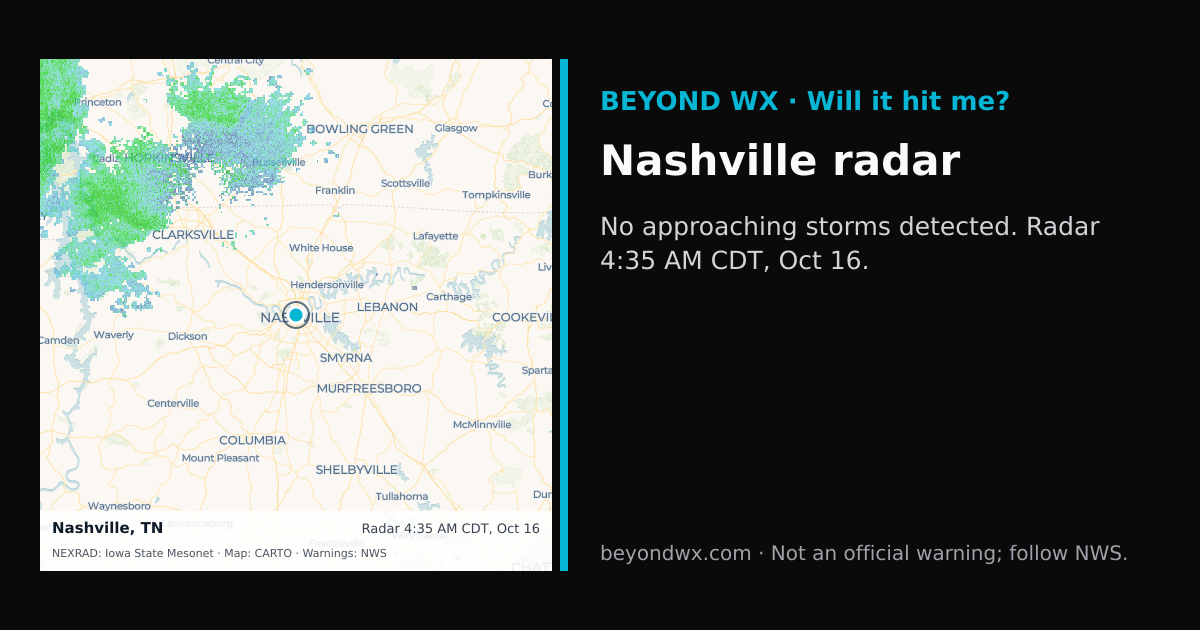
No rain expected in the next 2 hours.
No storms on track toward Nashville right now.
Hourly NWS forecast and radar storm motion. Times are local. Not an official warning; follow NWS.
Share: storm card image · live radar
Nashville, Tennessee, is characterized by a humid subtropical climate, marked by hot, humid summers and generally mild to cool winters. The city experiences four distinct seasons, with weather patterns influenced by its geographic location in the southeastern United States. Nashville's climate is typical of this classification, with a blend of continental and subtropical influences.
Summer temperatures in Nashville often reach highs in the upper 80s to low 90s Fahrenheit, while nighttime lows typically fall into the upper 60s to low 70s. Winters are mild, with average high temperatures in the upper 40s to low 50s, and lows usually in the low 30s. Spring and fall are transitional seasons with moderate temperatures, often considered the most pleasant times of year.
Annual precipitation in Nashville averages about 47 inches, with March and April typically being the wettest months. Rainfall is fairly evenly distributed throughout the year, although late summer can bring drier conditions. Snowfall is infrequent but possible, with an average of around 4 inches per year, primarily occurring in January and February.
Nashville is situated in an area that can experience severe weather, including thunderstorms and tornadoes, particularly during the spring and fall. The city is not in the core of Tornado Alley, but tornadoes are still a risk. Ice storms can occasionally occur in winter, impacting travel and infrastructure.
The city's elevation is approximately 600 feet above sea level, with the surrounding topography of rolling hills and river valleys playing a role in local weather conditions. This geographic context can lead to temperature inversions and localized fog, particularly in low-lying areas.