73°F
Mostly Clear
Data: NOAA/National Weather Service. Forecast updated Oct 16, 2026, 7:01 AM UTC. Discussion issued Oct 16, 2026, 5:30 AM UTC.
Air Quality Index: 55 (Moderate)
SPC Convective Outlook: Thunderstorm Risk
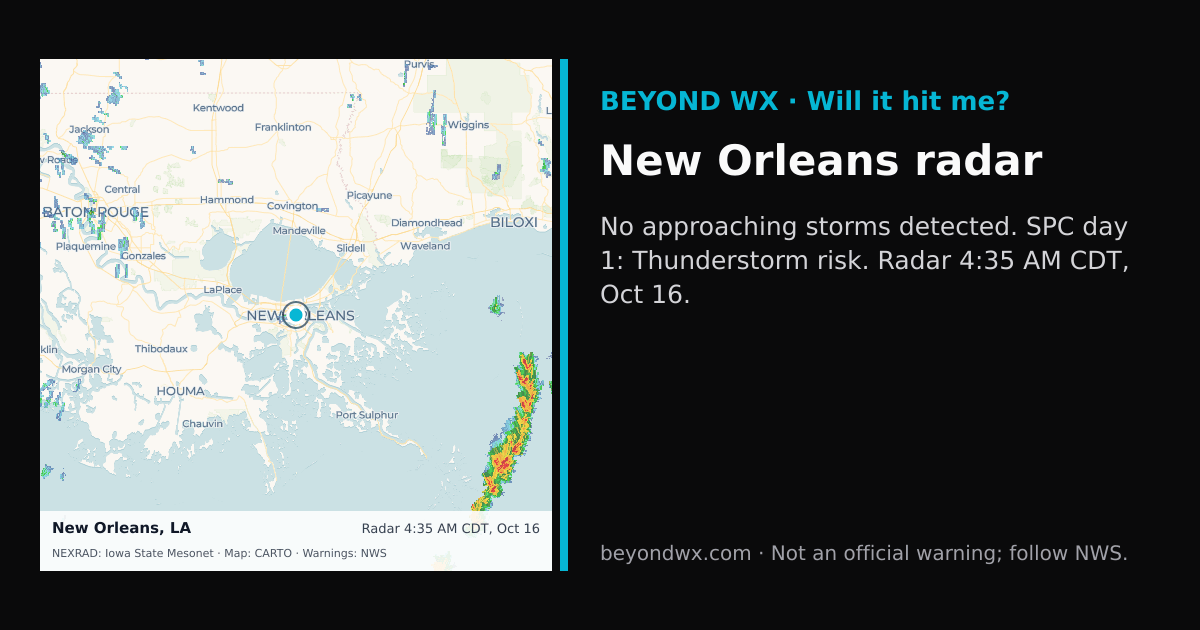
No rain expected in the next 2 hours.
No storms on track toward New Orleans right now.
Hourly NWS forecast and radar storm motion. Times are local. Not an official warning; follow NWS.
Share: storm card image · live radar
New Orleans, Louisiana, experiences a humid subtropical climate, characterized by hot, humid summers and mild winters. This climate type is marked by significant rainfall throughout the year, with no dry season. The city's proximity to the Gulf of Mexico contributes to its warm and moist environmental conditions.
During the summer months, temperatures typically range from highs in the low 90s°F to lows in the mid-70s°F. Winters are mild, with average highs in the low 60s°F and lows around the mid-40s°F. Spring and fall serve as transitional periods, with moderate temperatures and pleasant weather.
New Orleans receives approximately 64 inches of rainfall annually, making it one of the wettest cities in the United States. The wettest months are generally between June and September, coinciding with the Atlantic hurricane season. The city rarely sees snow, and when it does occur, it is typically minimal and short-lived.
New Orleans is notably susceptible to hurricanes and tropical storms due to its location along the Gulf Coast. These weather events can bring heavy rainfall, storm surges, and flooding, posing significant risks to the area. The city's low elevation and surrounding bodies of water, including Lake Pontchartrain and the Mississippi River, amplify these risks, making storm preparedness a critical aspect of local life.