57°F
Mostly Cloudy
Data: NOAA/National Weather Service. Forecast updated Oct 16, 2026, 1:42 AM UTC. Discussion issued Oct 16, 2026, 3:41 AM UTC.
Air Quality Index: 11 (Good)
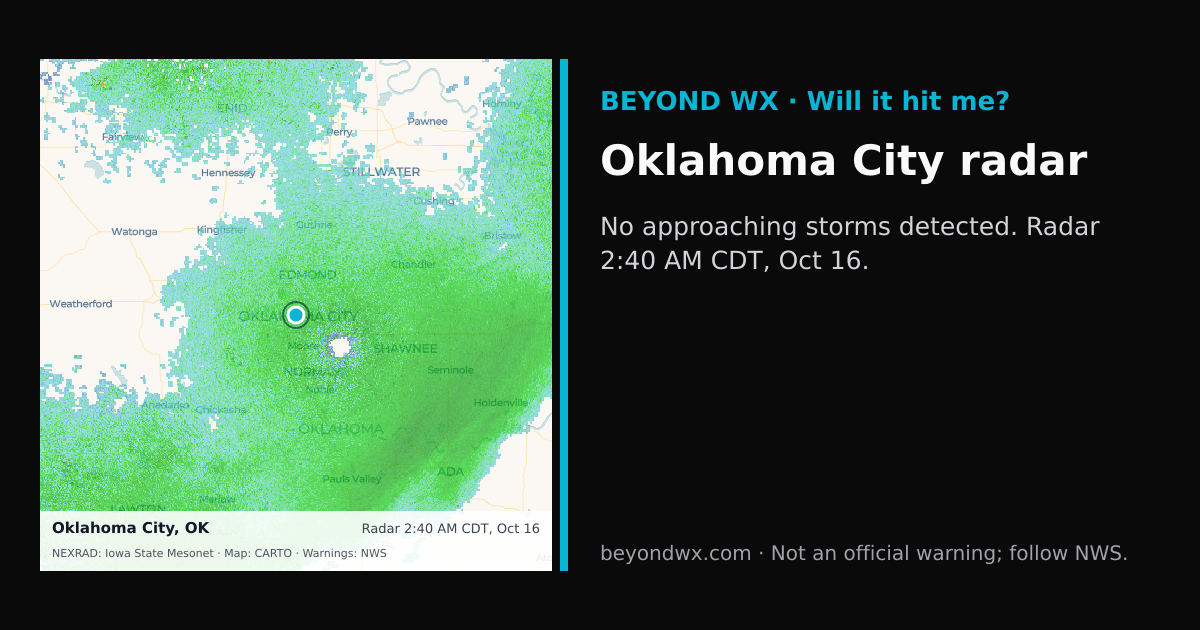
No rain expected in the next 2 hours.
No storms on track toward Oklahoma City right now.
Hourly NWS forecast and radar storm motion. Times are local. Not an official warning; follow NWS.
Share: storm card image · live radar
Oklahoma City, located in the central United States, experiences a humid subtropical climate with semi-arid influences. This results in hot, humid summers and generally mild to cool winters, along with significant seasonal variation. The city is characterized by its flat terrain and proximity to the Great Plains, which contribute to its distinct weather patterns.
In Oklahoma City, summer temperatures typically range from highs in the low 90s°F to lows in the low 70s°F. Winters are much cooler, with highs often in the upper 40s°F and lows dropping to the upper 20s°F. Spring and fall are transitional seasons, with spring being notably volatile due to the clash of warm and cold air masses, leading to frequent storms. Fall offers more stable and pleasant weather conditions.
The city receives an average annual rainfall of about 36 inches, with May being the wettest month, often exceeding 5 inches of rain. Conversely, January and February are the driest months, each averaging around 1.5 inches of precipitation. Snowfall is occasional, with an average of around 6 inches per year, primarily occurring between December and February.
Oklahoma City is situated in the heart of Tornado Alley, making it prone to severe weather outbreaks, particularly in the spring. The flat geography and lack of natural barriers contribute to the frequency of tornadoes and severe thunderstorms. The region also experiences occasional ice storms during winter, which can disrupt daily life and cause significant damage. Despite being inland, the city is far from any hurricane threats, but it does experience extreme heat waves during summer, exacerbated by high humidity levels.
The city's location on the southern edge of the Great Plains at an elevation of approximately 1,200 feet influences its climate significantly. The lack of nearby large water bodies and geographic barriers allows for rapid weather changes and contributes to the area's susceptibility to severe weather phenomena.