68°F
Slight Chance Showers And Thunderstorms
Data: NOAA/National Weather Service. Forecast updated Oct 18, 2026, 10:36 AM UTC. Discussion issued Oct 18, 2026, 11:27 AM UTC.
Air Quality Index: 31 (Good)
SPC Convective Outlook: Thunderstorm Risk
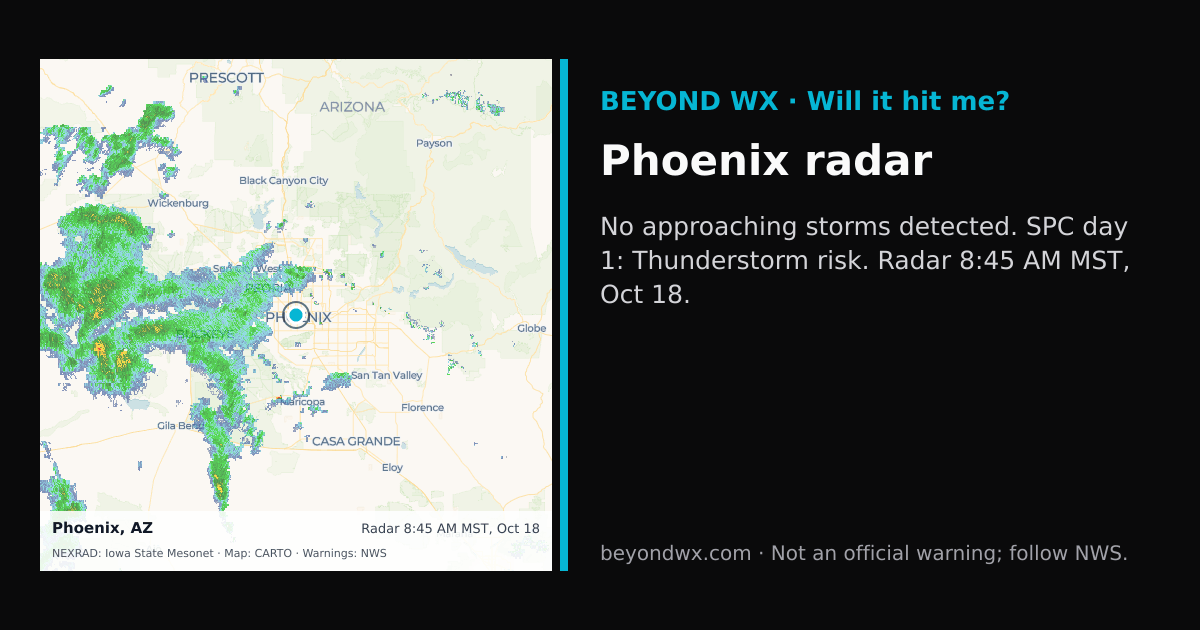
No rain expected in the next 2 hours.
No storms on track toward Phoenix right now.
Hourly NWS forecast and radar storm motion. Times are local. Not an official warning; follow NWS.
Share: storm card image · live radar
Phoenix, AZ, is classified as having a hot desert climate (BWh under the Köppen climate classification), characterized by extremely hot summers and mild winters. The city is known for its arid conditions and abundant sunshine throughout the year, making it a quintessential example of a desert climate.
In summer, temperatures are notoriously high, with average highs frequently exceeding 100°F and lows in the upper 70s to mid-80s. Winters are much milder, with average highs ranging from the mid-60s to low 70s and lows in the mid-40s. Spring and fall serve as transitional seasons, with temperatures gradually rising or falling, offering brief periods of more moderate weather.
Phoenix receives an annual average of about 8 inches of rainfall, with the majority occurring during the monsoon season, which typically spans from July to September. The wettest month is usually August, while the driest months are May and June. Snow is virtually non-existent in Phoenix due to the warm temperatures.
Monsoon season is a notable weather phenomenon in the area, bringing sporadic heavy rains, thunderstorms, and dust storms known as haboobs. The region also experiences extreme heat, particularly during the summer months, and is at risk for wildfires, especially during prolonged dry periods.
Situated in the Salt River Valley, Phoenix is surrounded by mountains, influencing its weather patterns. The city's elevation is approximately 1,086 feet above sea level, contributing to the significant temperature variations between day and night typical of desert climates.