60°F
Partly Cloudy
Data: NOAA/National Weather Service. Forecast updated Oct 17, 2026, 4:41 AM UTC. Discussion issued Oct 16, 2026, 11:09 PM UTC.
Air Quality Index: 30 (Good)
No rain expected in the next 2 hours.
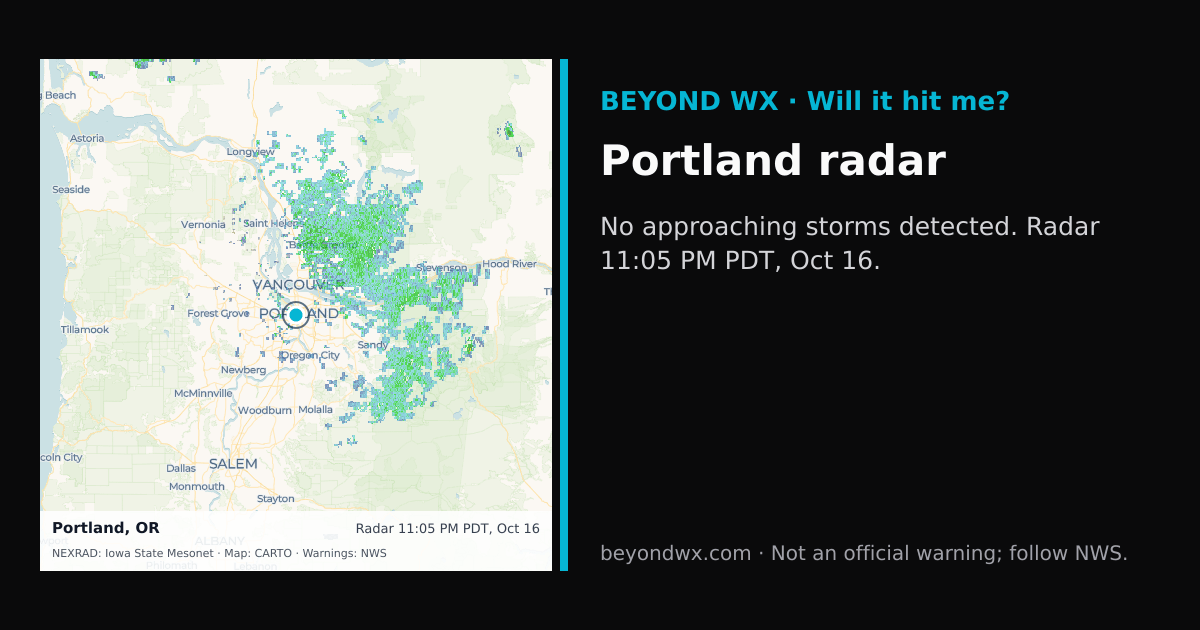
No storms on track toward Portland right now.
Hourly NWS forecast and radar storm motion. Times are local. Not an official warning; follow NWS.
Share: storm card image · live radar
Portland, Oregon, is classified under the Köppen climate classification as a warm-summer Mediterranean climate (Csb). This means it experiences warm, dry summers and cool, wet winters. The city is known for its temperate climate, which provides a balance between rainy and dry seasons, contributing to its lush green landscapes.
In the summer, Portland typically sees temperatures ranging from highs in the upper 70s to low 80s Fahrenheit, with lows in the mid to upper 50s. Winters are much cooler, with highs in the mid to upper 40s and lows in the mid-30s. Spring and fall are mild, with temperatures gradually transitioning between the extremes of summer and winter.
Portland receives an average annual rainfall of about 43 inches, with the wettest months being November through January. December is typically the peak of the rainy season. The driest months are July and August, when rainfall is minimal. Snowfall is relatively rare but can occur, with an average of around 4 inches per year, primarily in the winter months.
The area is not significantly affected by extreme weather phenomena such as tornadoes or hurricanes. However, it can experience occasional strong windstorms and, in recent years, has faced challenges with wildfire smoke during the late summer and early fall months. The city is also susceptible to occasional ice storms during the winter, particularly when cold air from the Columbia River Gorge meets moist Pacific air.
Portland's geographic location in the Pacific Northwest, along with its proximity to the Cascade Range and the Pacific Ocean, plays a significant role in shaping its climate. The city's elevation is relatively low at around 50 feet above sea level, which contributes to its moderate temperature range and weather patterns. The surrounding mountains and ocean currents help moderate temperatures and contribute to the region's characteristic rainy season.