75°F
Slight Chance Rain Showers
Data: NOAA/National Weather Service. Forecast updated Oct 16, 2026, 7:46 AM UTC. Discussion issued Oct 16, 2026, 5:57 AM UTC.
Air Quality Index: 29 (Good)
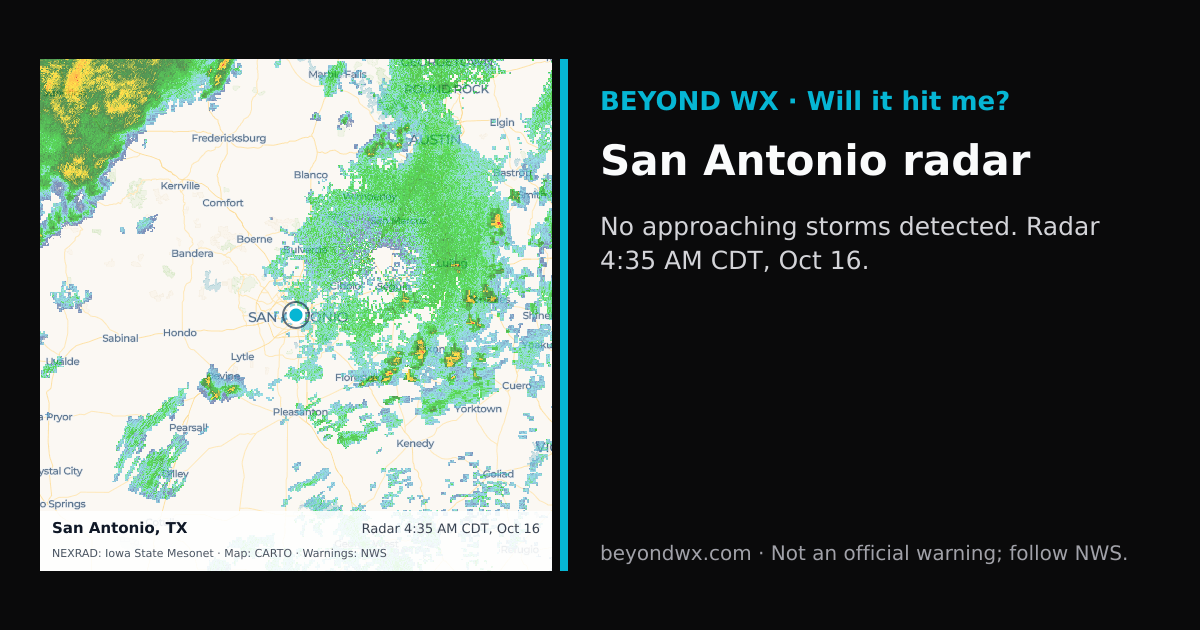
No rain expected in the next 2 hours.
No storms on track toward San Antonio right now.
Hourly NWS forecast and radar storm motion. Times are local. Not an official warning; follow NWS.
Share: storm card image · live radar
San Antonio, Texas, is classified under the humid subtropical climate category. This climate type is characterized by hot summers and mild winters, with a relatively high level of humidity throughout the year. The city experiences significant temperature variations between seasons, though extreme cold is rare.
During the summer months, San Antonio typically sees high temperatures ranging from the mid-90s to over 100°F, with lows in the mid-70s. Winters are mild, with average highs in the mid-60s and lows around the low 40s. Spring and fall offer transitional periods with more moderate temperatures, making these seasons quite pleasant with highs from the 70s to 80s and lows from the 50s to 60s.
Annual precipitation in San Antonio averages around 32 inches, with May and September often being the wettest months due to increased thunderstorm activity. The driest months are typically January and February. Snowfall is rare and typically not significant enough to accumulate, occurring only occasionally in winter months.
San Antonio's weather is occasionally influenced by tropical storms and hurricanes, which can bring heavy rains and strong winds, particularly in the late summer and early fall. The region can also experience severe thunderstorms and the occasional tornado, although it is not as susceptible to tornado activity as other parts of Texas. Extreme heat events are common in the summer, sometimes leading to prolonged heatwaves.
Geographically, San Antonio is situated in south-central Texas, at an elevation of about 650 feet above sea level. Its location on the edge of the Hill Country means the city is somewhat shielded from the more extreme weather patterns affecting the plains to the north, while its southern position keeps it warmer than many other parts of the United States.