70°F
Clear
Data: NOAA/National Weather Service. Forecast updated Oct 16, 2026, 6:57 AM UTC. Discussion issued Oct 15, 2026, 11:31 PM UTC.
Air Quality Index: 16 (Good)
No rain expected in the next 2 hours.
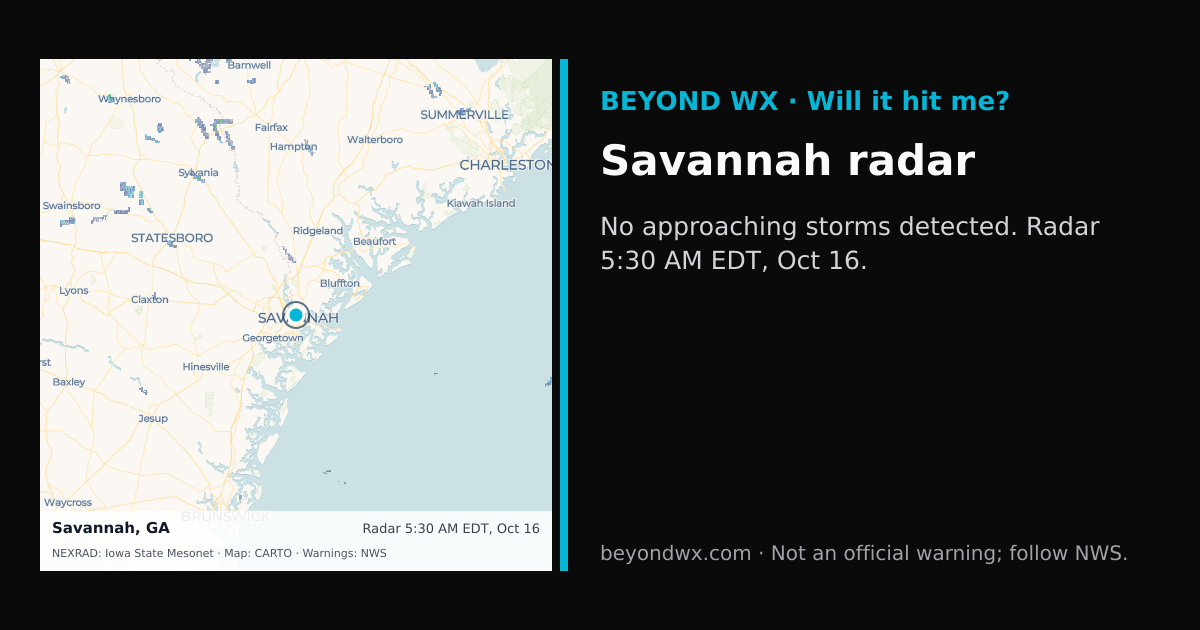
No storms on track toward Savannah right now.
Hourly NWS forecast and radar storm motion. Times are local. Not an official warning; follow NWS.
Share: storm card image · live radar
Savannah, GA, is characterized by a humid subtropical climate, which is typical of the southeastern United States. This climate classification results in hot, humid summers and mild winters, with a significant amount of annual precipitation. The city's proximity to the Atlantic Ocean moderates its temperatures, preventing extreme variations.
During the summer months, high temperatures in Savannah average in the low 90s°F, with overnight lows around the mid-70s°F. Winters are generally mild, with average highs in the low 60s°F and lows in the upper 30s°F. Spring and fall offer comfortable transitions, featuring moderate temperatures that range from the 60s°F to the 80s°F.
Savannah receives approximately 49 inches of rainfall annually. The wettest months are typically from June to September, coinciding with the Atlantic hurricane season, bringing frequent thunderstorms. The driest months are November and April. Snowfall is rare, with most winters experiencing no measurable snow.
The city is susceptible to hurricanes and tropical storms, which can lead to significant rainfall and flooding, particularly during the late summer and early fall. While tornadoes are less common than in the central United States, they can occur during severe storms. Savannah's low elevation and coastal location also contribute to its vulnerability to storm surges.
Geographically, Savannah is situated near the coast at an elevation of only about 49 feet above sea level, which influences its weather patterns by providing a maritime climate. This coastal position ensures that sea breezes frequently moderate the temperature and increase humidity levels, contributing to the overall climate experience in the area.