71°F
Clear
Data: NOAA/National Weather Service. Forecast updated Oct 16, 2026, 6:32 AM UTC. Discussion issued Oct 15, 2026, 9:31 PM UTC.
Air Quality Index: 69 (Moderate)
No rain expected in the next 2 hours.
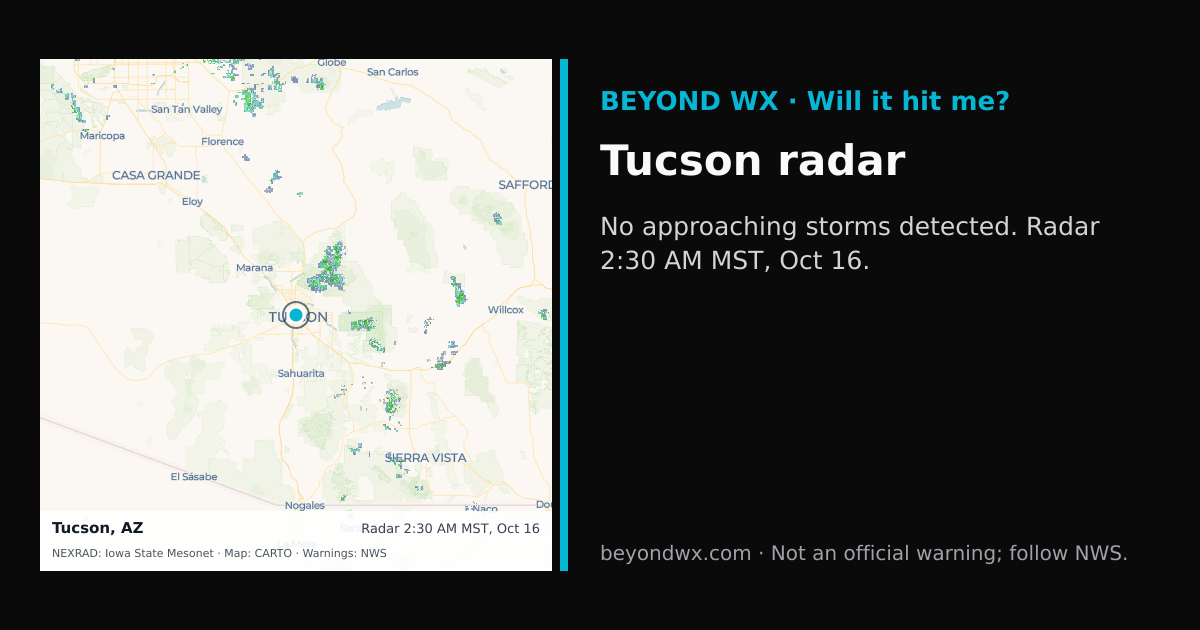
No storms on track toward Tucson right now.
Hourly NWS forecast and radar storm motion. Times are local. Not an official warning; follow NWS.
Share: storm card image · live radar
Tucson, Arizona, is characterized by a semi-arid climate, also known as a desert climate, typified by its hot summers and mild winters. Situated in the Sonoran Desert, the region experiences significant temperature variations between day and night, as well as between seasons. This climate type is marked by low humidity and abundant sunshine throughout the year.
During the summer months, temperatures in Tucson often reach highs of around 100°F, with nighttime lows generally cooling to the mid-70s°F. In contrast, winter temperatures are mild, with daytime highs typically in the mid-60s°F and lows dropping to the low 40s°F. Spring and fall serve as transitional periods, with temperatures ranging between these summer and winter extremes.
Annual precipitation in Tucson averages about 12 inches, with a notable pattern of bimodal distribution. The monsoon season, which spans from late June through September, is the wettest period, bringing intense but brief thunderstorms that account for nearly half of the annual rainfall. In contrast, the driest months are typically April and May. Snowfall is rare in Tucson, given its desert location and low elevation.
Tucson is particularly known for its monsoon season, which can lead to flash flooding and is a vital component of the region's hydrology. The area also experiences extreme heat during the summer, and while wildfires can occur, they are more common in the surrounding mountainous areas. The city's weather is significantly influenced by its geographic position at an elevation of approximately 2,400 feet, which moderates temperatures compared to lower desert areas.