75°F
Partly Cloudy
Data: NOAA/National Weather Service. Forecast updated Oct 17, 2026, 1:13 AM UTC. Discussion issued Oct 16, 2026, 7:06 PM UTC.
Air Quality Index: 68 (Moderate)
No rain expected in the next 2 hours.
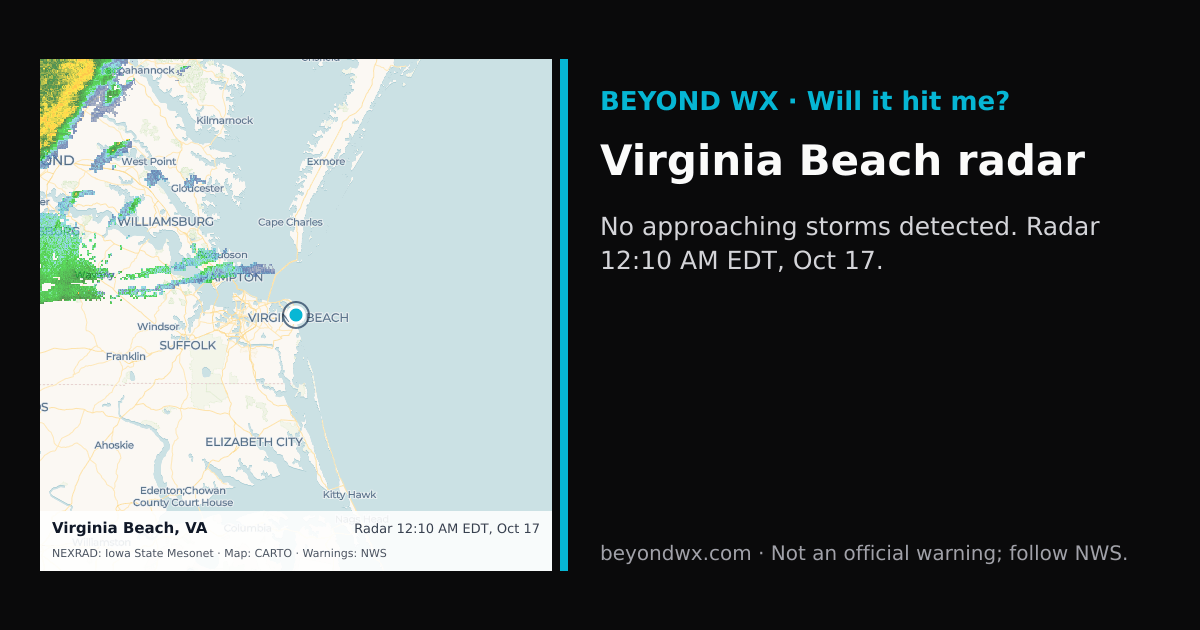
No storms on track toward Virginia Beach right now.
Hourly NWS forecast and radar storm motion. Times are local. Not an official warning; follow NWS.
Share: storm card image · live radar
Virginia Beach, VA, falls within the humid subtropical climate zone, characterized by hot, humid summers and mild winters. This coastal city experiences a significant influence from the Atlantic Ocean, which moderates temperature extremes and contributes to its generally temperate conditions. Summers see average high temperatures in the mid-80s°F, occasionally reaching the 90s, while nighttime lows often settle in the low 70s°F. Winters are mild, with highs typically in the upper 40s to low 50s°F and lows in the mid-30s°F. Spring and fall are transitional seasons with moderate temperatures that are highly enjoyable.
The area receives an average annual rainfall of about 47 inches, well-distributed throughout the year. August tends to be the wettest month, often due to tropical storm activity, while November is usually the driest. Snowfall is infrequent and light, averaging less than 6 inches per year, mostly occurring in January and February. The proximity to the ocean reduces the likelihood of significant snow accumulation.
Virginia Beach is exposed to notable weather phenomena such as hurricanes and tropical storms, primarily from June to November. The risk of hurricanes, though not as high as in more southern coastal areas, remains a significant concern due to potential storm surges and wind damage. The flat, low-lying topography and proximity to the Atlantic Ocean play a crucial role in shaping its climate, with the ocean providing a buffer against extreme temperatures and influencing precipitation patterns.