83°F
Chance Showers And Thunderstorms
Data: NOAA/National Weather Service. Forecast updated Oct 16, 2026, 7:46 AM UTC. Discussion issued Oct 16, 2026, 5:34 AM UTC.
Air Quality Index: 19 (Good)
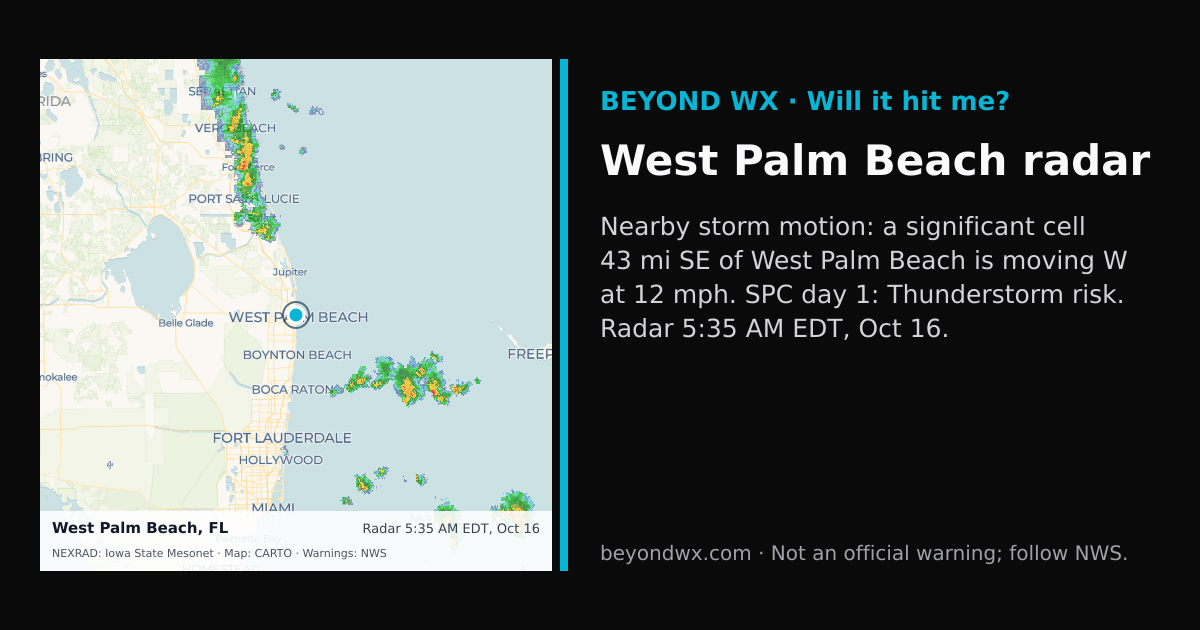
SPC Convective Outlook: Thunderstorm Risk
Rain likely now and through the next 2 hours.
Hourly NWS forecast and radar storm motion. Times are local. Not an official warning; follow NWS.
Share: storm card image · live radar
West Palm Beach, FL, is classified as having a tropical rainforest climate, characterized by hot, humid summers and mild, warm winters. This coastal city experiences a consistent climate due to its proximity to the Atlantic Ocean, classified under the Köppen system as Af, indicative of its tropical nature with no dry season.
In terms of temperature, summers in West Palm Beach bring average highs in the upper 80s to low 90s°F, while nighttime lows hover around the mid-70s°F. Winters are mild, with daytime temperatures typically in the mid-70s°F and overnight lows in the upper 50s to low 60s°F. Spring and fall are transitional seasons with temperatures ranging between these summer and winter averages, offering mild and pleasant weather.
West Palm Beach receives about 63 inches of rainfall annually, with the wettest months being June through September during the Atlantic hurricane season. These months can see frequent thunderstorms and heavy downpours. The driest period is during winter, from November through April, when rainfall is less frequent. Snowfall is nonexistent in this region due to its warm climate.
The area is notably susceptible to hurricanes and tropical storms, given its location on Florida's southeastern coast. These storms can bring strong winds and heavy rains, significantly impacting the weather pattern during the hurricane season. The flat, low-lying geography of West Palm Beach, coupled with its coastal position, allows for the penetration of sea breezes, which help moderate temperatures but also contribute to the area's high humidity levels.