49°F
Mostly Clear
Data: NOAA/National Weather Service. Forecast updated Oct 16, 2026, 6:31 AM UTC. Discussion issued Oct 16, 2026, 5:19 AM UTC.
Air Quality Index: 32 (Good)
No rain expected in the next 2 hours.
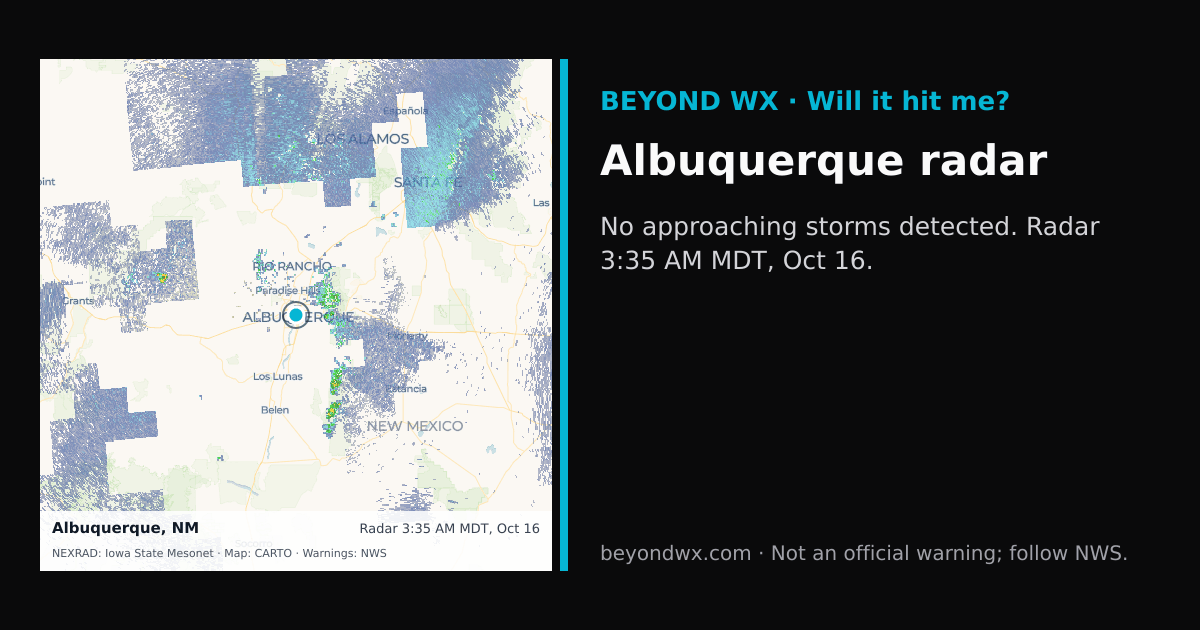
No storms on track toward Albuquerque right now.
Hourly NWS forecast and radar storm motion. Times are local. Not an official warning; follow NWS.
Share: storm card image · live radar
Albuquerque, NM, located at 35.0844°N latitude and 106.6504°W longitude, experiences a semi-arid climate. This classification is characterized by low humidity and significant temperature variations between seasons. The city's high desert location contributes to its dry environment and ample sunshine, punctuated by cool winters and hot summers.
During the summer months, Albuquerque typically experiences high temperatures ranging from the mid-80s to mid-90s Fahrenheit, with lows in the 60s. Winter temperatures can fluctuate substantially, with daytime highs averaging in the mid-40s to low 50s and nighttime lows often dipping into the 20s. Spring and fall serve as transitional seasons, offering milder temperatures and generally pleasant weather.
The city receives an average annual precipitation of about 9 inches. July and August are the wettest months due to the North American Monsoon, which brings brief but intense thunderstorms. Conversely, winter months like January and February are among the driest. Snowfall is infrequent but can occur, typically amounting to an average of about 10 inches annually.
Albuquerque is susceptible to specific weather phenomena, including the summer monsoon, which can lead to flash flooding due to the area's arid soil and rapid runoff. The region also faces a wildfire season, exacerbated by dry conditions and high winds. Extreme heat can occur in the summer, although the city's elevation often tempers the intensity compared to lower desert regions.
Situated in the high desert at an elevation of approximately 5,312 feet, Albuquerque's climate is influenced by its geographic and topographic setting. The surrounding Sandia Mountains to the east help modulate weather patterns, providing some shelter from prevailing winds and contributing to the relatively mild climate compared to other areas at similar latitudes.