69°F
Mostly Clear
Data: NOAA/National Weather Service. Forecast updated Oct 16, 2026, 6:26 AM UTC. Discussion issued Oct 16, 2026, 5:39 AM UTC.
Air Quality Index: 64 (Moderate)
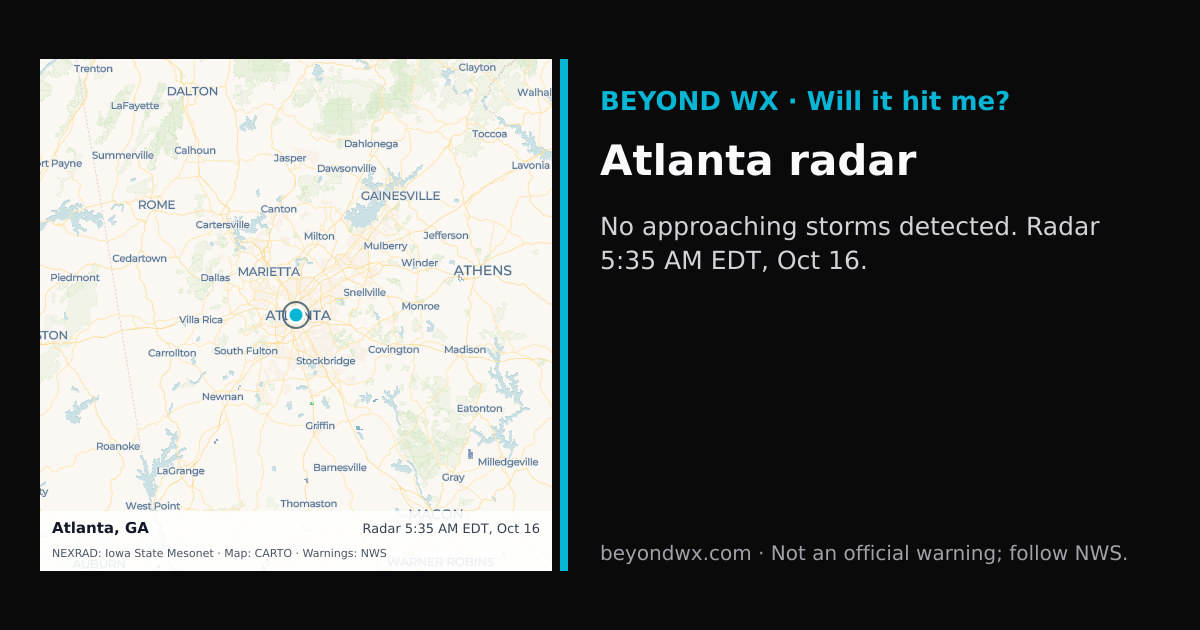
No rain expected in the next 2 hours.
No storms on track toward Atlanta right now.
Hourly NWS forecast and radar storm motion. Times are local. Not an official warning; follow NWS.
Share: storm card image · live radar
Atlanta, Georgia, falls under the humid subtropical climate classification, characterized by hot, humid summers and mild winters. This type of climate is typical of the southeastern United States where warm, moist air from the Gulf of Mexico significantly influences weather patterns.
In summer, Atlanta experiences average high temperatures around 89°F, with lows around 71°F, while winter highs average about 53°F, with lows near 34°F. Spring and fall are transitional seasons with moderate temperatures, generally ranging from the 60s to the 80s in spring, and 50s to 70s in fall, providing a pleasant climate during these periods.
Annual rainfall in Atlanta averages approximately 50 inches, with March being the wettest month. Rain is fairly well-distributed throughout the year, though October often sees the least precipitation. Snowfall is rare but possible, usually amounting to only a trace to a couple of inches annually, primarily in January or February.
Atlanta's weather is occasionally influenced by tropical systems during the hurricane season, bringing heavy rain and strong winds. While tornadoes can occur, they are less frequent than in the central part of the state. Ice storms are a more common winter hazard, causing significant disruptions when they occur.
Situated at an elevation of about 1,050 feet above sea level, Atlanta’s geography includes rolling hills and a mix of urban and forested areas. This elevation contributes to a slightly cooler climate compared to other Southeastern cities at lower altitudes, along with varying microclimates across the metropolitan area.