57°F
Clear
Data: NOAA/National Weather Service. Forecast updated Oct 17, 2026, 6:21 PM UTC. Discussion issued Oct 17, 2026, 11:35 PM UTC.
Air Quality Index: 25 (Good)
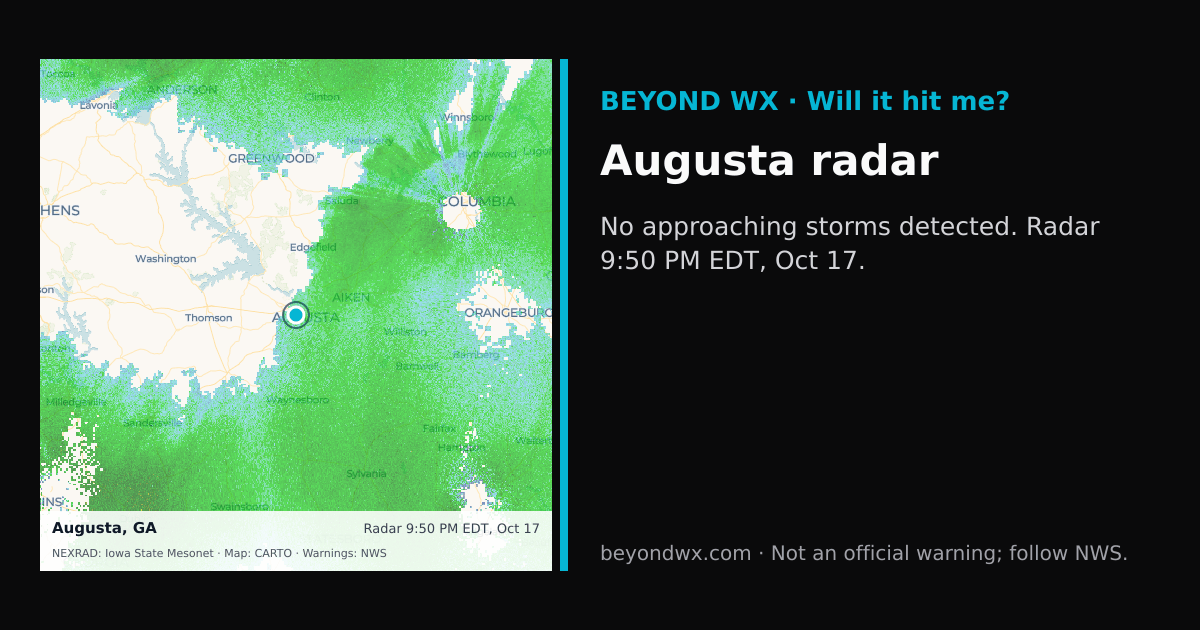
No storms on track toward Augusta right now.
Hourly NWS forecast and radar storm motion. Times are local. Not an official warning; follow NWS.
Share: storm card image · live radar
Augusta, GA, is classified as having a humid subtropical climate, characterized by hot, humid summers and mild winters. This climate type typically involves significant rainfall throughout the year, with no distinct dry season, contributing to lush vegetation in the region. The city experiences a varied temperature range, with average summer highs reaching around 92°F and lows around 70°F. Winters are mild, with average highs around 58°F and lows near 37°F. Spring and fall serve as transitional seasons, often featuring comfortable temperatures with highs in the 60s and 70s.
Precipitation in Augusta averages about 45 inches annually, with the wettest months typically being July and August due to frequent thunderstorms. These summer storms contribute to the overall humidity and are often intense but brief. The driest months tend to be October and November. Snowfall is rare in Augusta, with trace amounts occasionally occurring during particularly cold winters.
The area is susceptible to certain weather phenomena, including the risk of hurricanes and tropical storms, especially from late summer into early fall. While Augusta is inland, remnants of coastal storms can bring heavy rain and strong winds. Thunderstorms are common in the warmer months, sometimes leading to localized flooding. Tornadoes are less frequent but remain a potential threat during severe weather outbreaks.
Augusta's geographic context includes its location near the Savannah River and an elevation of approximately 136 feet above sea level, which influences its weather patterns. This setting contributes to the relatively mild winter temperatures and the increased humidity levels experienced throughout the year. The nearby Piedmont region can also affect local weather, occasionally contributing to cooler air flows during transitional seasons.