61°F
Chance Rain Showers
Data: NOAA/National Weather Service. Forecast updated Oct 16, 2026, 6:23 AM UTC. Discussion issued Oct 16, 2026, 12:57 AM UTC.
Air Quality Index: 16 (Good)
SPC Convective Outlook: Slight Risk
Rain likely now, easing around 5:00 AM.
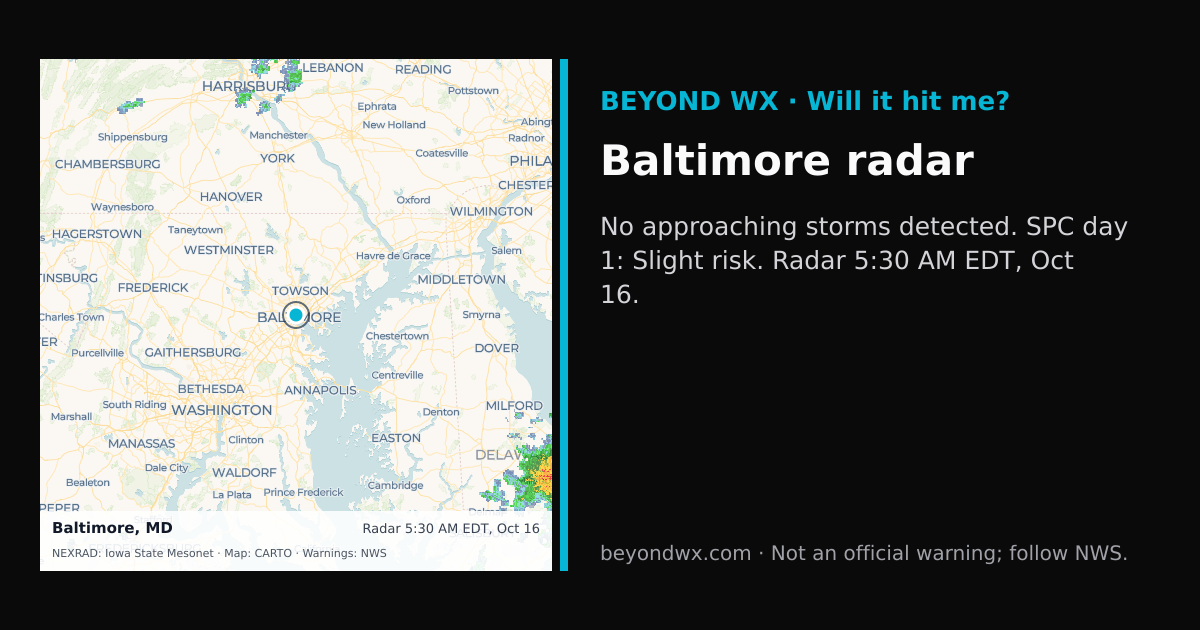
No storms on track toward Baltimore right now.
Hourly NWS forecast and radar storm motion. Times are local. Not an official warning; follow NWS.
Share: storm card image · live radar
Baltimore, Maryland, is classified under the humid subtropical climate zone. This classification is characterized by hot, humid summers and generally mild to cool winters. The city experiences a mix of maritime and continental influences due to its proximity to the Chesapeake Bay and its position on the Eastern Seaboard.
In the summer, Baltimore typically sees high temperatures averaging in the mid to upper 80s Fahrenheit, with lows in the mid-60s. Winter temperatures can vary, with highs generally in the low 40s and lows often dipping into the upper 20s. Spring and fall bring moderate temperatures, with highs ranging from the 50s to 70s, providing a comfortable transition between the more extreme seasons.
Baltimore receives an annual average rainfall of about 42 inches. The wettest months are usually July and August, coinciding with thunderstorm activity, while February tends to be the driest. Snowfall is relatively modest, averaging around 20 inches per winter season, with January typically being the snowiest month.
The city is susceptible to several notable weather phenomena. It is at risk for the impacts of tropical storms and hurricanes, particularly in late summer and early fall. While tornadoes are less common than in the central U.S., the region does experience occasional severe thunderstorms that can produce them. Additionally, winter storms can bring ice and snow, occasionally disrupting transportation and daily life.
Baltimore's weather is influenced by its geographic location near the Chesapeake Bay and its relatively low elevation of around 33 feet above sea level. The Bay moderates temperatures, particularly in the cooler months, and can also contribute to increased humidity levels during the summer. The city's position on the fall line affects precipitation patterns and contributes to the diverse weather conditions experienced throughout the year.