45°F
Partly Cloudy
Data: NOAA/National Weather Service. Forecast updated Oct 16, 2026, 6:26 AM UTC. Discussion issued Oct 16, 2026, 4:01 AM UTC.
Air Quality Index: 19 (Good)
No rain expected in the next 2 hours.
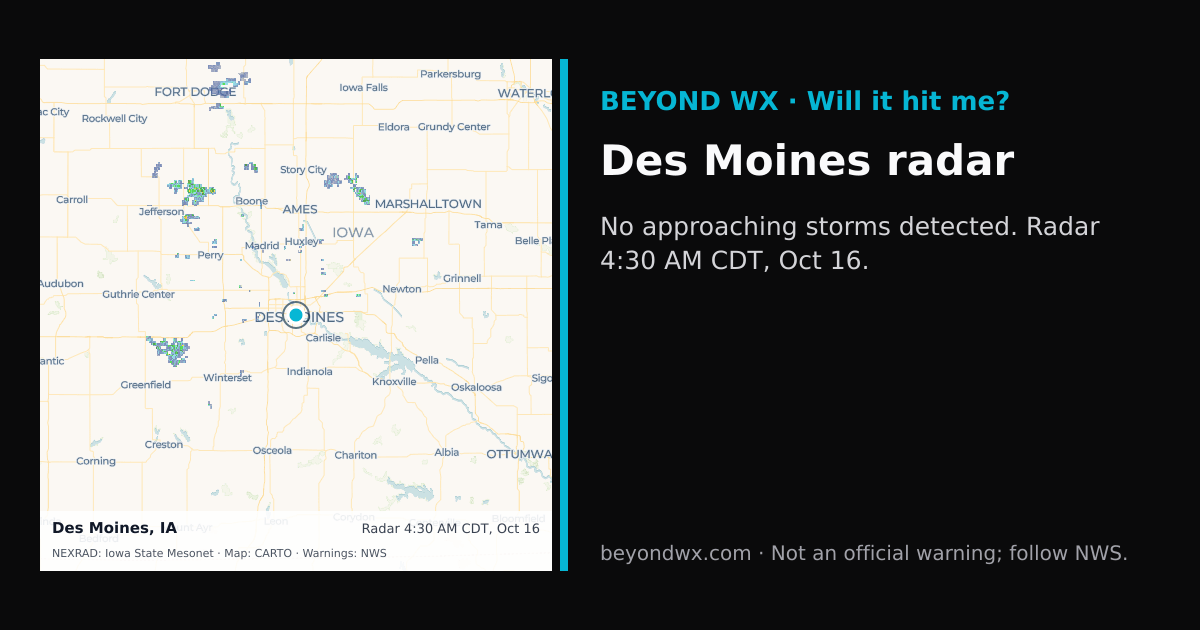
No storms on track toward Des Moines right now.
Hourly NWS forecast and radar storm motion. Times are local. Not an official warning; follow NWS.
Share: storm card image · live radar
Des Moines, IA, falls under the humid continental climate classification, characterized by four distinct seasons with hot summers and cold winters. This climate type is typical for the Midwestern United States, where there is a significant temperature variation between seasons. The region experiences warm, humid summers and cold, snowy winters.
During the summer months, average high temperatures in Des Moines range from the mid-80s to the low 90s Fahrenheit, while nighttime lows typically drop to the mid-60s. Winter temperatures often range from highs in the low 30s to lows in the teens. Spring and fall offer milder conditions, with highs ranging from the 50s to 70s, making these transitional seasons quite pleasant.
Des Moines receives an average annual precipitation of around 36 inches, with May and June being the wettest months due to frequent thunderstorms. Winter months contribute to the total precipitation with an average of 33 inches of snow, primarily falling between December and February. The driest months tend to be January and February, aside from snowfall.
The city is located within Tornado Alley, making it susceptible to severe weather events, particularly in the spring and early summer. These can include tornadoes, thunderstorms, and occasional hail. Ice storms are another winter hazard, typically occurring in late winter or early spring.
Geographically, Des Moines is situated at an elevation of approximately 955 feet above sea level, within the central plains. This relatively flat terrain does not provide significant geographic barriers to weather systems, allowing for rapid temperature changes and the influx of different air masses, which contribute to the region's variable weather patterns.