56°F
Mostly Cloudy
Data: NOAA/National Weather Service. Forecast updated Oct 16, 2026, 6:27 AM UTC. Discussion issued Oct 16, 2026, 3:41 AM UTC.
Air Quality Index: 15 (Good)
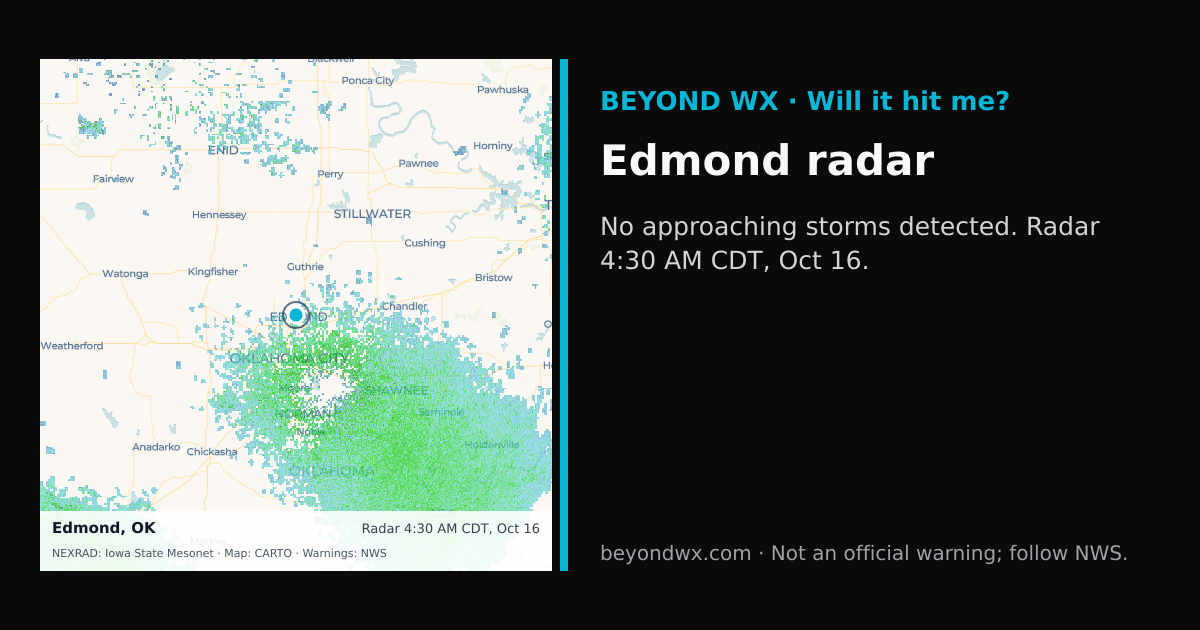
No rain expected in the next 2 hours.
No storms on track toward Edmond right now.
Hourly NWS forecast and radar storm motion. Times are local. Not an official warning; follow NWS.
Share: storm card image · live radar
Edmond, Oklahoma, is characterized by a humid subtropical climate, with influences of a continental climate due to its interior location. This results in hot summers and cold winters with distinct seasonal variations. The area experiences a wide range of temperatures throughout the year. In summer, high temperatures typically range from 85°F to 95°F, while lows can be around 65°F to 75°F. In winter, highs average between 45°F and 55°F, with nighttime lows often dipping to 25°F to 35°F. Spring and fall are transitional seasons with mild and pleasant temperatures, though they can be unpredictable.
Edmond receives an annual average precipitation of approximately 38 inches. May is usually the wettest month, with rainfall frequently exceeding 5 inches, contributing to the region's severe weather season. Winter months tend to be drier, although December and January can bring occasional snow, averaging around 6 inches annually. The driest period generally occurs in January, with less than 2 inches of rain.
The city is situated in Tornado Alley, making it susceptible to severe thunderstorms and tornadoes, especially in the spring and early summer. Ice storms can occur in winter, posing significant challenges. Edmond's relatively low elevation of about 1,200 feet above sea level contributes to its continental climate traits, where temperature extremes are more pronounced than in coastal regions. This geographic setting, combined with central U.S. weather patterns, influences its varied and dynamic weather conditions.