59°F
Sunny
Data: NOAA/National Weather Service. Forecast updated Oct 18, 2026, 10:21 AM UTC. Discussion issued Oct 18, 2026, 11:31 AM UTC.
Air Quality Index: 26 (Good)
No rain expected in the next 2 hours.
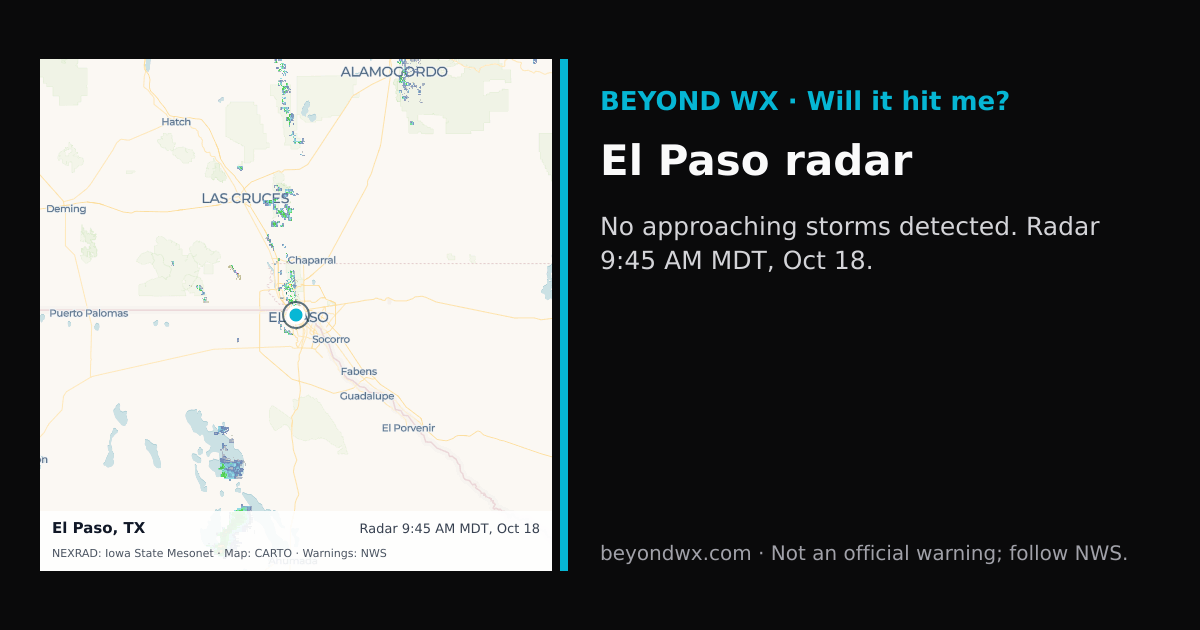
No storms on track toward El Paso right now.
Hourly NWS forecast and radar storm motion. Times are local. Not an official warning; follow NWS.
Share: storm card image · live radar
El Paso, Texas, is classified as having a semi-arid climate, characterized by hot summers, mild winters, and low annual rainfall. This desert climate results in a generally dry atmosphere with considerable temperature fluctuations between day and night. The region's aridity is influenced by its location in the Chihuahuan Desert.
During summer, El Paso experiences high temperatures typically ranging from 90°F to 100°F, with occasional spikes above 100°F. Nighttime lows drop to the mid-70s, providing some relief from the daytime heat. Winters are mild, with highs usually in the low to mid-60s and lows in the 30s, though temperatures can occasionally dip below freezing. Spring and fall are transitional with comfortable temperatures, making them ideal times of the year.
Annual precipitation in El Paso averages around 9 inches, with the majority occurring during the North American Monsoon season from July to September. August is usually the wettest month, while the driest period extends from March to June. Snowfall is rare but not unheard of, with occasional light snow events during winter.
El Paso's weather is influenced by its geographic location and elevation. Situated at approximately 3,800 feet above sea level in the Franklin Mountains, the city experiences lower humidity and more sunshine than many other parts of Texas. Extreme heat is a notable weather phenomenon, especially during summer months, while the monsoon season can lead to sudden thunderstorms and flash flooding.