39°F
Clear
Data: NOAA/National Weather Service. Forecast updated Oct 17, 2026, 4:35 AM UTC. Discussion issued Oct 16, 2026, 11:20 PM UTC.
Air Quality Index: 21 (Good)
No rain expected in the next 2 hours.
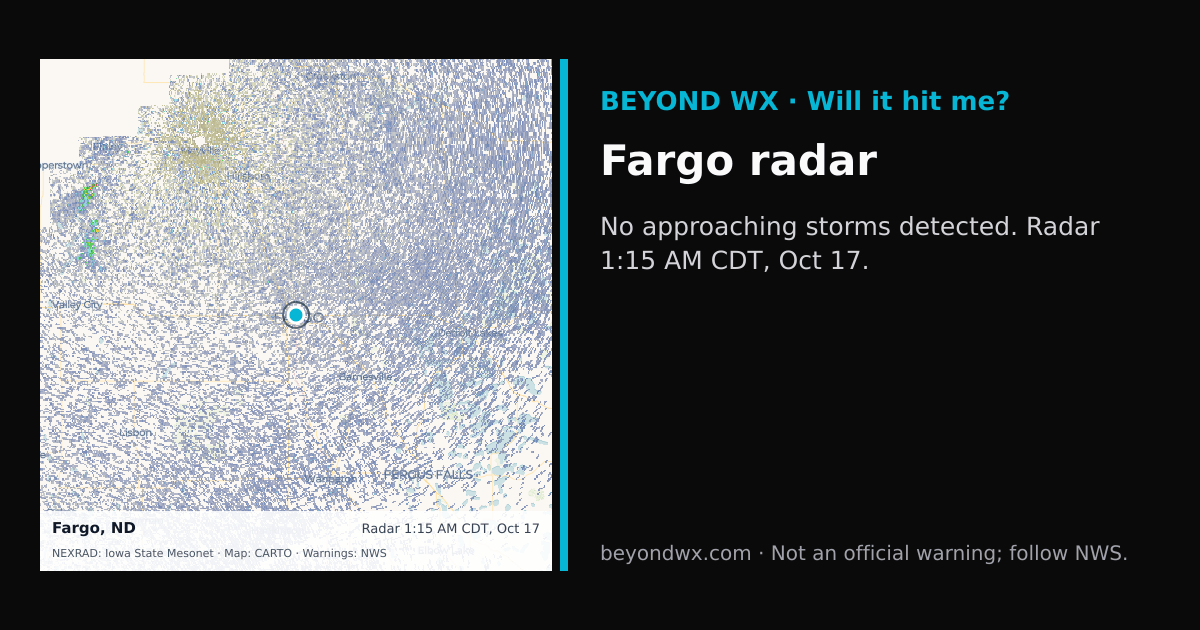
No storms on track toward Fargo right now.
Hourly NWS forecast and radar storm motion. Times are local. Not an official warning; follow NWS.
Share: storm card image · live radar
Fargo, ND experiences a humid continental climate characterized by cold winters and warm summers. This climate classification is marked by significant temperature differences between seasons, with relatively moderate precipitation spread throughout the year. The city is situated in the Red River Valley, which influences its weather patterns.
During winter, temperatures in Fargo often range from highs around 19°F to lows near 0°F. In contrast, summer sees temperatures typically ranging from highs in the low 80s to lows in the upper 50s. Spring and fall are transitional seasons, with spring seeing a gradual warming trend and fall experiencing a cooling trend, both featuring more moderate temperatures and variable conditions.
Fargo receives an average annual precipitation of about 22 inches, with June typically being the wettest month due to increased convective activity. The driest months are typically January and February. Snowfall is significant, with an average annual accumulation of approximately 51 inches, primarily occurring from November through March.
Notable weather phenomena in Fargo include blizzards and ice storms during the winter months, which can lead to hazardous conditions. Fargo is also part of Tornado Alley, though tornado occurrences are less frequent than in more southern parts of the region. Flooding can be a concern, particularly in spring, due to snowmelt and rain in the Red River Valley.
The geographic context of Fargo, being at a low elevation in the flat Red River Valley, contributes to its susceptibility to flooding. The lack of significant natural barriers in the region allows for the easy movement of weather systems, contributing to the area's dynamic weather patterns.