63°F
Clear
Data: NOAA/National Weather Service. Forecast updated Oct 16, 2026, 7:56 AM UTC. Discussion issued Oct 16, 2026, 5:25 AM UTC.
Air Quality Index: 89 (Moderate)
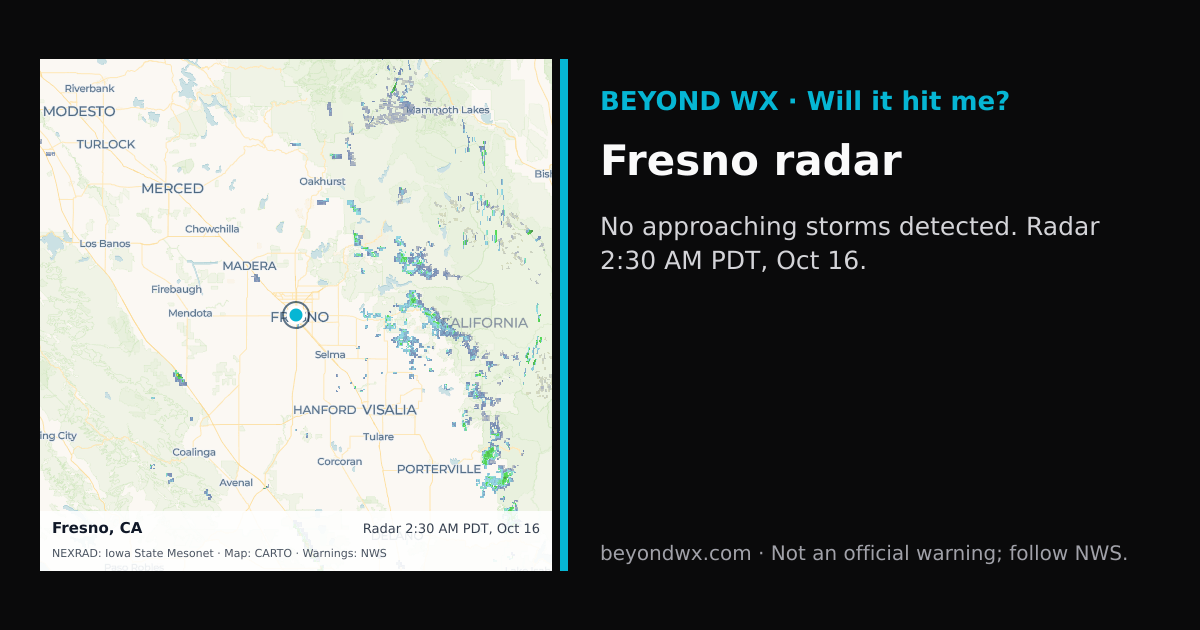
No rain expected in the next 2 hours.
No storms on track toward Fresno right now.
Hourly NWS forecast and radar storm motion. Times are local. Not an official warning; follow NWS.
Share: storm card image · live radar
Fresno, CA, exhibits a semi-arid climate characterized by hot, dry summers and mild, wet winters. The region experiences significant temperature variations between seasons, with summer highs often reaching into the upper 90s°F, occasionally surpassing 100°F, while winter lows typically range from the mid-30s°F to the low 40s°F. During spring and fall, temperatures are more moderate, with highs generally in the 70s°F and 80s°F.
Annual precipitation in Fresno averages around 11 inches, with the majority falling between November and March. January is typically the wettest month, while the summer months, particularly June through September, are very dry. Snowfall is rare in Fresno due to its low elevation and mild winters, with any snow typically melting quickly.
The area is prone to notable weather phenomena, including periods of extreme heat during summer and the potential for drought, exacerbated by the dry climate. Wildfire risk is heightened during the late summer and early fall, when vegetation is driest. Additionally, the region occasionally experiences poor air quality due to smoke from wildfires and agricultural activities.
Geographically, Fresno is situated in the San Joaquin Valley at an elevation of approximately 300 feet above sea level. This location contributes to its climate by creating an environment where hot, dry air can stagnate, especially in summer, and cold air can settle during winter nights. The surrounding Sierra Nevada mountains influence local weather patterns, affecting precipitation and temperature distribution in the region.