59°F
Clear
Data: NOAA/National Weather Service. Forecast updated Oct 18, 2026, 10:03 PM UTC. Discussion issued Oct 18, 2026, 5:37 PM UTC.
Air Quality Index: 36 (Good)
No rain expected in the next 2 hours.
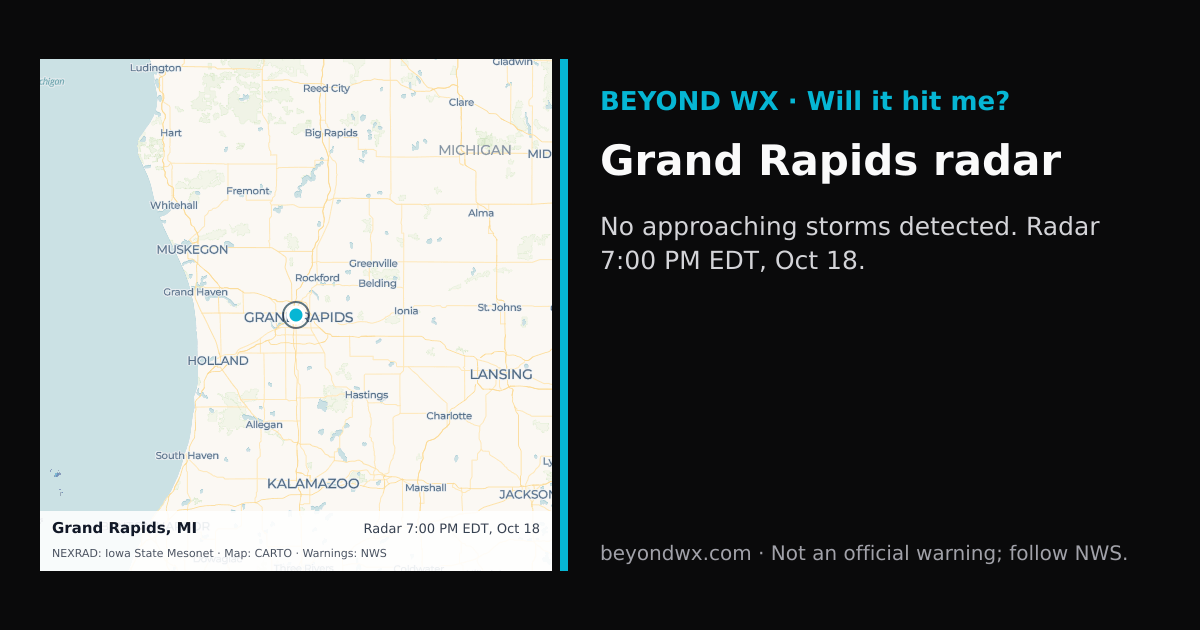
No storms on track toward Grand Rapids right now.
Hourly NWS forecast and radar storm motion. Times are local. Not an official warning; follow NWS.
Share: storm card image · live radar
Grand Rapids, MI, is characterized by a humid continental climate, marked by four distinct seasons with cold winters and warm summers. This classification reflects significant temperature variations and a balance of precipitation throughout the year. The region experiences a mix of maritime and continental influences due to its proximity to the Great Lakes.
During the summer months, temperatures in Grand Rapids typically range from highs in the low 80s°F to lows in the mid-60s°F. Winters are cold, with average highs in the low 30s°F and lows often dropping into the upper teens. Spring and fall serve as transitional periods with more moderate temperatures; spring sees a gradual warming while fall features a cooling trend.
Grand Rapids receives an average annual precipitation of about 38 inches, with the wettest months being May and September. Snowfall is significant, particularly from December through February, with an average annual accumulation of about 75 inches, heavily influenced by lake effect snow. This phenomenon occurs when cold air moves over the warmer waters of Lake Michigan, resulting in localized snow events.
Notable weather phenomena include substantial lake effect snow, which frequently impacts the region during the winter months. This can lead to heavy snowfall and challenging driving conditions. The area is generally not prone to tornadoes or hurricanes but can experience occasional severe thunderstorms, especially in the spring and summer.
The geographic setting of Grand Rapids, with its relatively low elevation and proximity to Lake Michigan, plays a crucial role in its climate. The lake moderates temperatures, preventing extremes, and contributes to the aforementioned lake effect snow, significantly shaping the city’s winter weather patterns.