70°F
Mostly Clear
Data: NOAA/National Weather Service. Forecast updated Oct 16, 2026, 8:05 AM UTC. Discussion issued Oct 16, 2026, 4:53 AM UTC.
Air Quality Index: 56 (Moderate)
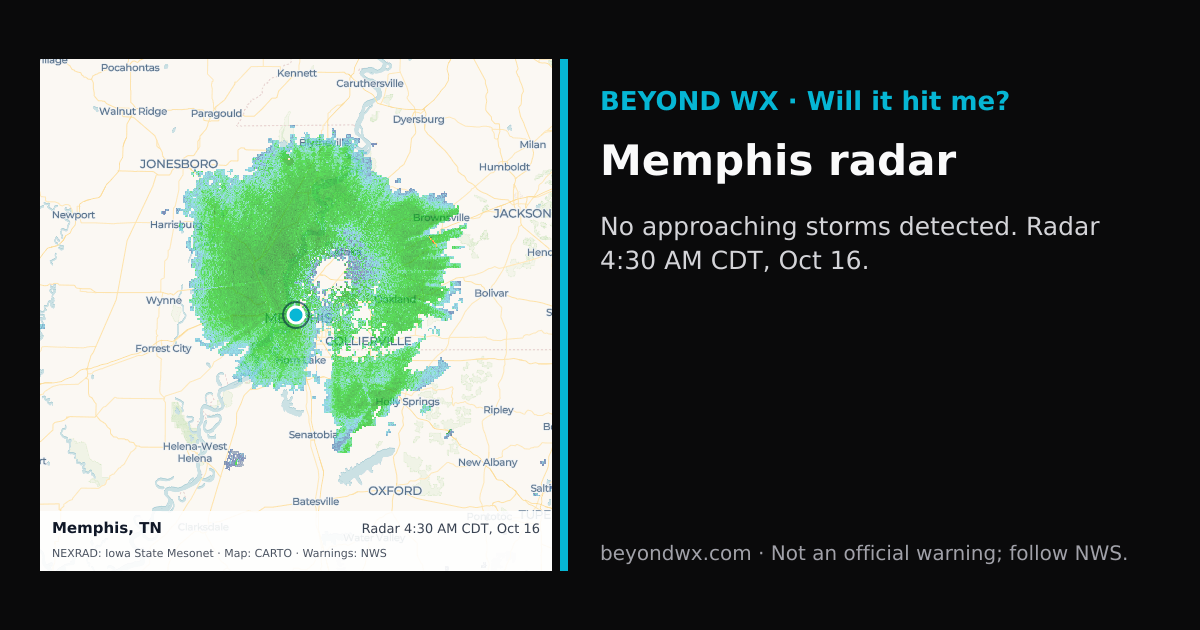
No rain expected in the next 2 hours.
No storms on track toward Memphis right now.
Hourly NWS forecast and radar storm motion. Times are local. Not an official warning; follow NWS.
Share: storm card image · live radar
Memphis, Tennessee, is classified under the humid subtropical climate category, characterized by hot, humid summers and mild to cool winters. This classification is typical of regions in the southeastern United States, where warm, moist air masses dominate for much of the year. The city's climate is influenced by its proximity to the Mississippi River, which can moderate temperatures slightly but also contributes to humidity levels.
During the summer months, average high temperatures in Memphis can reach the low 90s°F, while lows typically hover around the mid-70s°F. Winters are relatively mild, with average highs in the upper 40s°F to low 50s°F and lows in the 30s°F. Spring and fall serve as transitional periods with more moderate temperatures, often accompanied by variable weather conditions.
Memphis receives an average annual precipitation of about 53 inches, with the wettest months being March through May and November. The summer months generally see frequent thunderstorms, while winter snowfall is rare and typically light, averaging around 3 inches per year. The driest period usually occurs in August and September, although precipitation is fairly well-distributed throughout the year.
The city is situated in an area that occasionally experiences severe weather phenomena, including thunderstorms that can produce tornadoes. While not as prone to tornadoes as areas to the west, Memphis still has a moderate risk. Ice storms are another concern during winter months, as they can disrupt transportation and power services. Memphis's weather is shaped by its low elevation and location in the Mississippi River Valley, which can lead to temperature inversions and occasional fog, affecting local weather patterns.