75°F
Partly Cloudy
Data: NOAA/National Weather Service. Forecast updated Oct 17, 2026, 4:42 AM UTC. Discussion issued Oct 16, 2026, 11:29 PM UTC.
Air Quality Index: 47 (Good)
No rain expected in the next 2 hours.
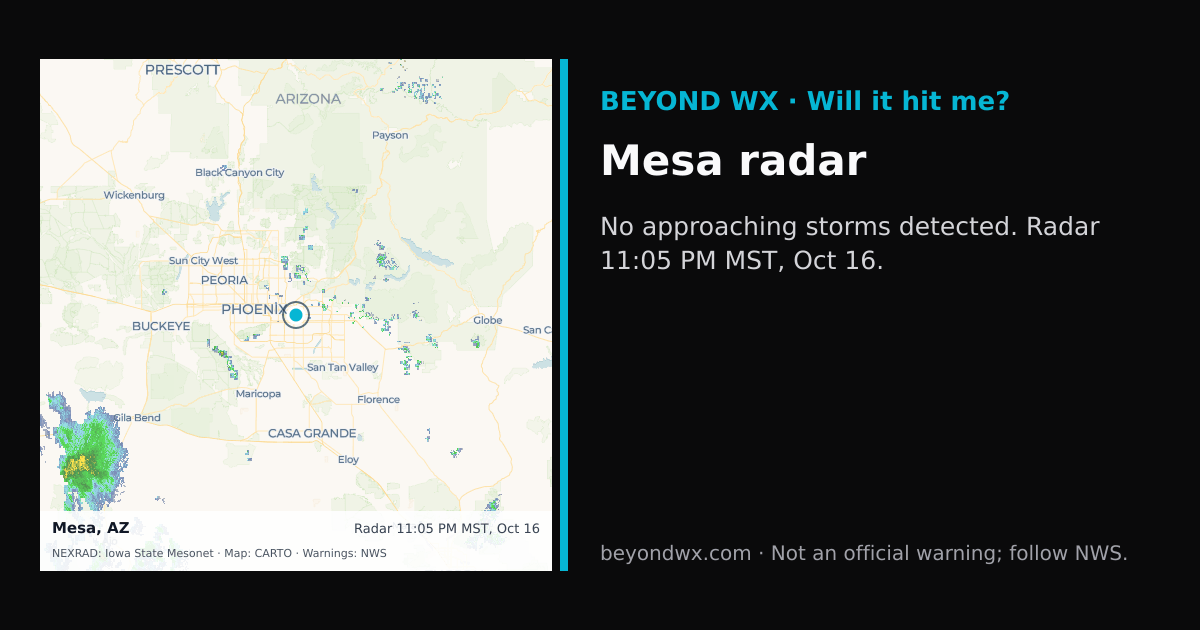
No storms on track toward Mesa right now.
Hourly NWS forecast and radar storm motion. Times are local. Not an official warning; follow NWS.
Share: storm card image · live radar
Mesa, AZ, is classified as having a hot desert climate (BWh) according to the Köppen climate classification. This type of climate is characterized by extremely hot summers and mild winters, with very low annual precipitation. Mesa's geographical location in the Sonoran Desert significantly influences its weather patterns, making it one of the hottest cities in the United States.
During the summer months, temperatures in Mesa frequently range from highs of 100°F to 110°F, with overnight lows often staying above 75°F. In contrast, winter months are mild, with daytime highs averaging between 65°F and 75°F and nighttime lows typically dropping to around 40°F. Spring and fall are transitional seasons with temperatures that can vary widely, often experiencing rapid changes from cool to hot conditions.
Mesa receives an average annual precipitation of about 9 inches, predominantly falling during the monsoon season from July to September. These months are the wettest, with occasional intense thunderstorms, while May and June are typically the driest months. Snowfall is extremely rare in Mesa due to its low elevation and warm climate.
The area is notably impacted by the North American Monsoon, which brings increased humidity and the potential for severe thunderstorms, dust storms, and flash flooding. Mesa is also prone to extreme heat, especially during the peak of summer. Its geographic location in a desert basin and an elevation of approximately 1,240 feet contribute to these conditions, creating a unique and challenging climate environment.