45°F
Rain Showers Likely
Data: NOAA/National Weather Service. Forecast updated Oct 16, 2026, 6:21 AM UTC. Discussion issued Oct 16, 2026, 5:28 AM UTC.
Air Quality Index: 24 (Good)
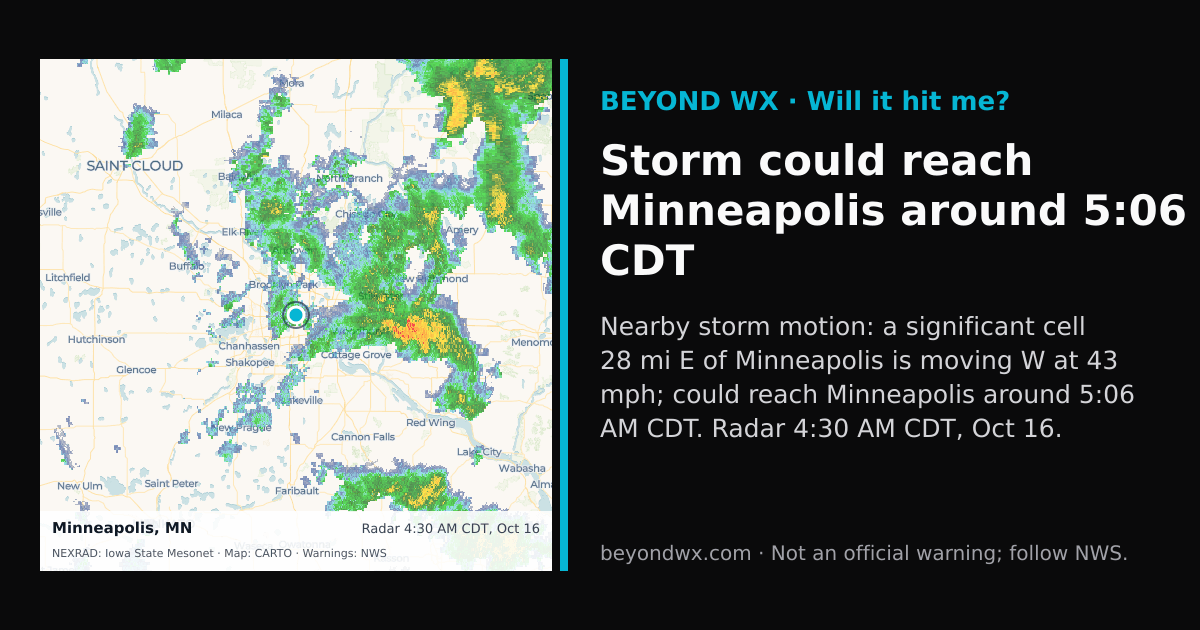
Rain likely now and through the next 2 hours.
Hourly NWS forecast and radar storm motion. Times are local. Not an official warning; follow NWS.
Share: storm card image · live radar
Minneapolis, MN, experiences a humid continental climate, characterized by cold, snowy winters and warm, humid summers. This classification is typical for regions located in the interior of North America, away from the moderating influence of oceans. The city exhibits significant seasonal temperature variations, with a broad range in annual temperatures.
During winter, temperatures in Minneapolis often dip well below freezing, with average highs around 24°F and lows near 9°F. In contrast, summer temperatures average highs around 83°F, while lows typically hover around 64°F. Spring and fall are transitional seasons, with milder temperatures and gradual shifts between the extremes of winter and summer.
Annual precipitation in Minneapolis averages about 31 inches, with the wettest months occurring in summer, particularly June, which receives around 4 inches of rain. Snow is a significant component of the winter months, with the city accumulating approximately 54 inches of snow annually. February is generally the driest month, with less than an inch of precipitation on average.
Minneapolis is occasionally affected by severe weather phenomena, including thunderstorms and tornadoes, due to its location in the northern reaches of Tornado Alley. Winter storms can bring heavy snow and ice, impacting travel and daily activities. While not directly influenced by lake effect snow, proximity to large bodies of water like the Great Lakes can modify regional weather patterns.
The city is situated on the flat plains of the Upper Midwest, with an elevation of about 830 feet above sea level. This geographic setting contributes to the stark temperature contrasts between seasons and allows for the free movement of air masses, resulting in rapid weather changes. The Mississippi River runs through the city, influencing local microclimates and occasionally affecting weather patterns.