67°F
Cloudy
Data: NOAA/National Weather Service. Forecast updated Oct 16, 2026, 7:22 AM UTC. Discussion issued Oct 16, 2026, 5:31 AM UTC.
Air Quality Index: 53 (Moderate)
SPC Convective Outlook: Thunderstorm Risk
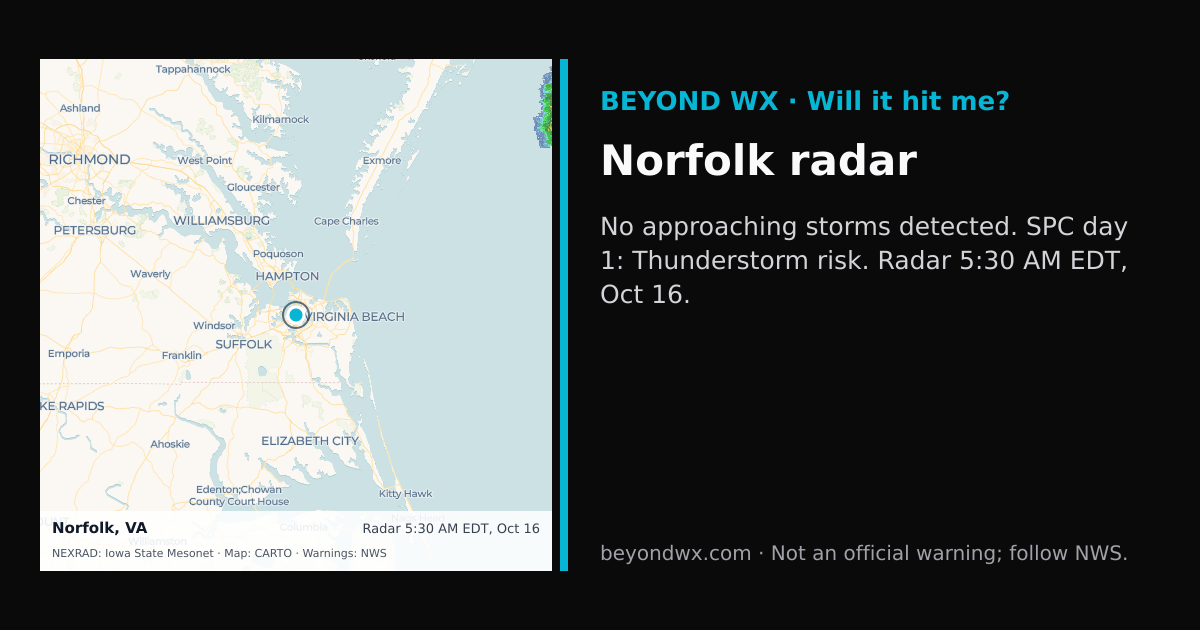
No rain expected in the next 2 hours.
No storms on track toward Norfolk right now.
Hourly NWS forecast and radar storm motion. Times are local. Not an official warning; follow NWS.
Share: storm card image · live radar
Norfolk, VA, is characterized by a humid subtropical climate, typified by hot summers, mild winters, and moderate humidity. This climate classification results from its coastal location, influencing both temperature and precipitation patterns. Summers in Norfolk are typically hot, with average high temperatures reaching around 87°F and lows around 70°F. Winters are mild, with average highs near 50°F and lows around 32°F. Spring and fall are transitional seasons with moderate temperatures, providing a comfortable climate.
Precipitation in Norfolk is relatively evenly distributed throughout the year, with an annual average of about 47 inches. The wettest months tend to be July and August, coinciding with the peak of the Atlantic hurricane season, while the driest months are typically February and November. Snowfall is infrequent but can occur, primarily in January and February, with average annual snowfall being minimal, usually around 5 inches.
Norfolk is susceptible to various weather phenomena due to its coastal position. The area is at risk for hurricanes and tropical storms, particularly from late summer to early fall, which can bring heavy rainfall and strong winds. While tornadoes are less frequent, they can occur during severe thunderstorms. The city's low elevation and proximity to the Chesapeake Bay can also result in flooding, especially during storm surges associated with tropical systems.
The geographic location of Norfolk, near sea level and along the Atlantic Ocean, significantly influences its weather patterns. The proximity to water moderates temperature extremes, while the flat terrain contributes to the potential for flooding during significant rain events. This coastal setting plays a crucial role in shaping Norfolk's climate characteristics.