46°F
Mostly Cloudy
Data: NOAA/National Weather Service. Forecast updated Oct 16, 2026, 7:56 AM UTC. Discussion issued Oct 16, 2026, 4:54 AM UTC.
Air Quality Index: 24 (Good)
No rain expected in the next 2 hours.
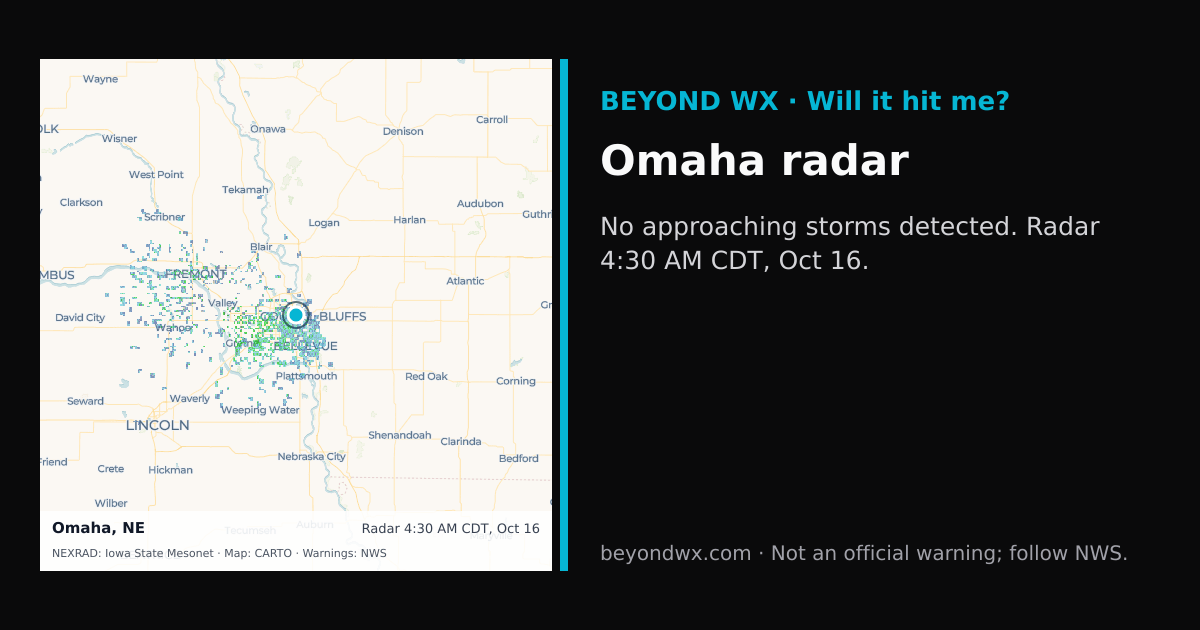
No storms on track toward Omaha right now.
Hourly NWS forecast and radar storm motion. Times are local. Not an official warning; follow NWS.
Share: storm card image · live radar
Omaha, Nebraska, is classified under the humid continental climate, characterized by significant seasonal temperature variations and moderate humidity. Summers are typically hot and humid, while winters can be cold and dry. This climate type is prevalent in much of the central United States, where Omaha is situated.
During the summer months, high temperatures in Omaha often reach the mid-to-upper 80s°F, with occasional peaks into the 90s°F. Overnight lows generally fall to the mid-60s°F. In contrast, winter temperatures can be harsh, with daytime highs averaging in the mid-30s°F and nighttime lows dipping into the teens. Spring and fall offer milder conditions, transitioning comfortably between the extremes of summer and winter.
Omaha receives an average annual precipitation of about 30 inches, with May and June typically being the wettest months, owing to frequent thunderstorms and occasional heavy rainfall. In winter, the city sees about 26 inches of snow, with January and February being the snowiest months. The climate is further influenced by its location within Tornado Alley, making severe thunderstorms and tornadoes more likely during the spring and early summer.
The geographical context of Omaha, positioned on the Missouri River and at an elevation of approximately 1,090 feet, influences its weather patterns. The river can moderate temperatures slightly, but the city's location on the Great Plains subjects it to the full force of continental weather systems, contributing to its pronounced seasonal variability.