74°F
Mostly Clear
Data: NOAA/National Weather Service. Forecast updated Oct 16, 2026, 6:55 AM UTC. Discussion issued Oct 16, 2026, 5:50 AM UTC.
Air Quality Index: 19 (Good)
SPC Convective Outlook: Thunderstorm Risk
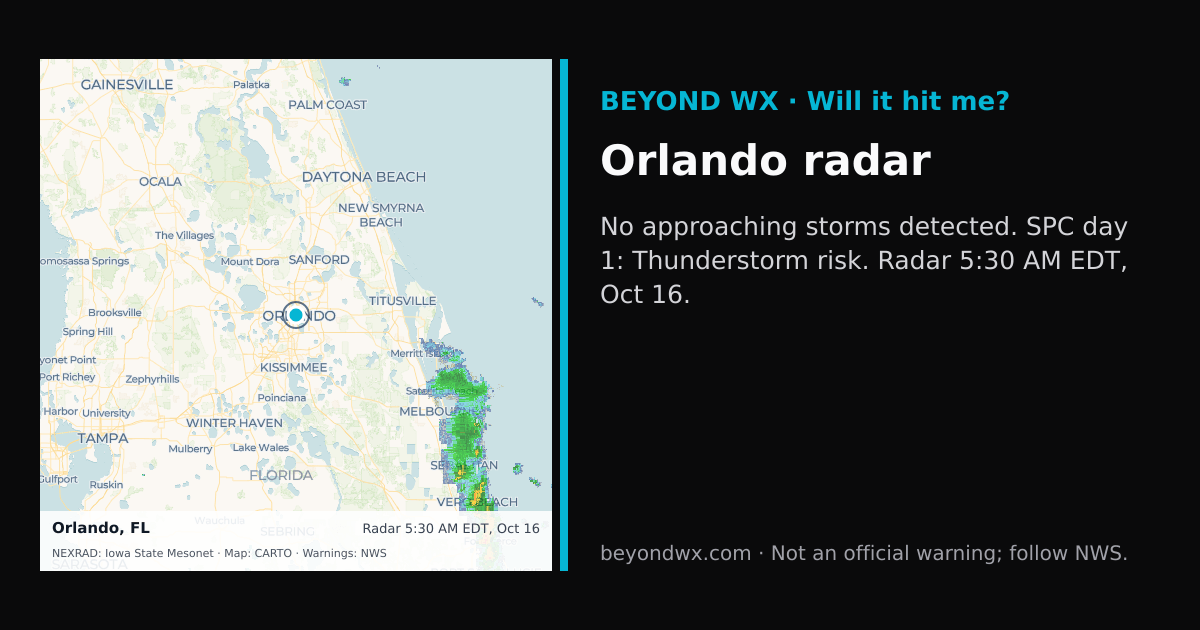
No rain expected in the next 2 hours.
No storms on track toward Orlando right now.
Hourly NWS forecast and radar storm motion. Times are local. Not an official warning; follow NWS.
Share: storm card image · live radar
Orlando, Florida, is classified as having a humid subtropical climate, characterized by hot, humid summers and mild, dry winters. This climate type results in a generally warm environment year-round, with distinct wet and dry seasons. The city's location in central Florida contributes to its weather patterns, as it lies within the influence of both tropical and subtropical air masses.
During the summer, Orlando experiences average high temperatures ranging from 90°F to 92°F, with lows typically in the mid-70s. The winter months are mild, with average highs around 72°F to 75°F and lows in the low 50s. Spring and fall serve as transitional periods with moderate temperatures, making these seasons particularly pleasant.
Annual rainfall in Orlando is approximately 52 inches, with the majority falling between June and September, during the wet season. August is generally the wettest month, while November tends to be the driest. Orlando does not experience snowfall due to its warm climate and low elevation.
Orlando is prone to tropical weather phenomena, notably hurricanes and tropical storms, due to its location within the Atlantic hurricane basin. Although inland, the area can still experience significant impacts from these systems, including heavy rainfall and strong winds. Additionally, the region occasionally faces severe thunderstorms and tornadoes, primarily during the summer months.
The city's relatively flat topography and low elevation, approximately 82 feet above sea level, contribute to its climate characteristics. The presence of numerous lakes in the area can also influence local weather patterns, particularly in terms of humidity and localized breezes.