48°F
Mostly Cloudy
Data: NOAA/National Weather Service. Forecast updated Oct 16, 2026, 6:49 AM UTC. Discussion issued Oct 16, 2026, 12:19 AM UTC.
Air Quality Index: 22 (Good)
SPC Convective Outlook: Thunderstorm Risk
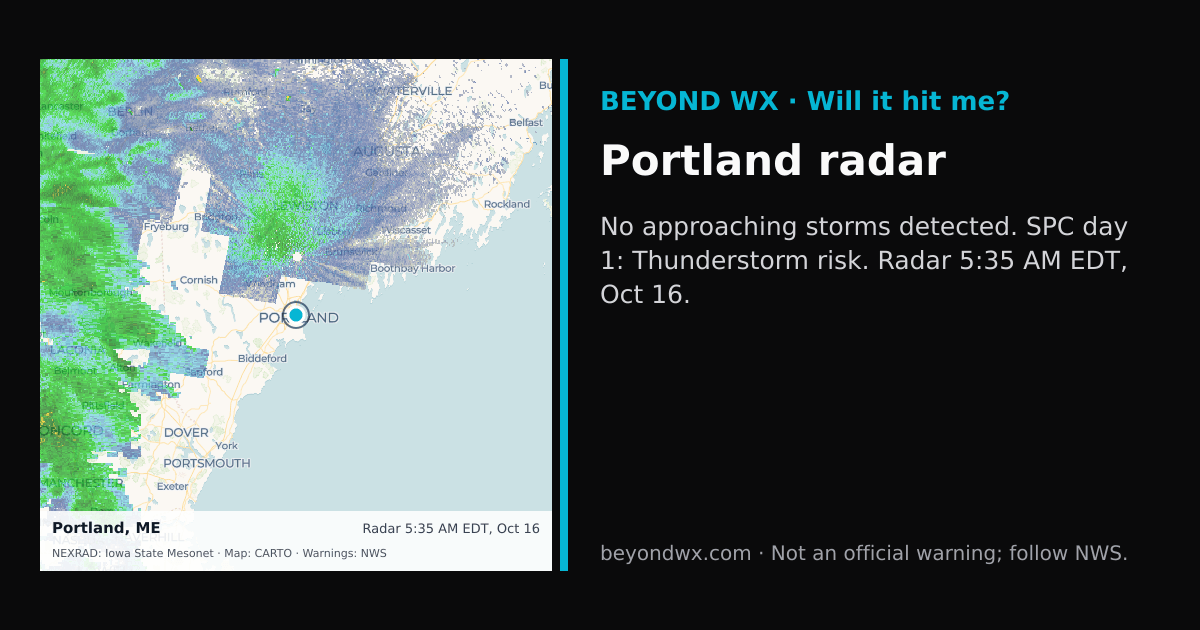
No rain expected in the next 2 hours.
No storms on track toward Portland right now.
Hourly NWS forecast and radar storm motion. Times are local. Not an official warning; follow NWS.
Share: storm card image · live radar
Portland, ME, is classified as having a humid continental climate, characterized by cold, snowy winters and warm, humid summers. This climate type is typical of regions with significant seasonal temperature variation and distinct seasons. The city's coastal location along the Gulf of Maine influences its weather patterns, contributing to its humid conditions.
During the summer months, temperatures in Portland typically range from highs in the upper 70s to low 80s°F, with lows in the mid-50s to low 60s°F. Winters are cold, with high temperatures generally in the mid-30s°F and lows often dipping into the teens. Spring and fall act as transitional periods, with spring seeing gradual warming and fall experiencing a crisp cool-down.
Portland receives an annual average precipitation of about 47 inches, with November being the wettest month. Snowfall is significant, averaging around 60 inches per winter, with the heaviest snowfalls typically occurring in January and February. The driest month is typically July, though summer does see occasional thunderstorms.
The city is occasionally impacted by nor'easters, which can bring heavy snow and strong winds, especially in winter. While hurricanes are less common, remnants of tropical systems can bring heavy rain. Portland's proximity to the Atlantic Ocean helps moderate extreme temperatures, but its coastal position also makes it susceptible to coastal flooding during storms.
Situated at sea level along the northeastern U.S. coastline, Portland's geography, including its proximity to the ocean and the inland topography of New England, plays a crucial role in its weather patterns. This geographical context contributes to its relatively mild coastal climate compared to inland areas at similar latitudes.