51°F
Mostly Cloudy
Data: NOAA/National Weather Service. Forecast updated Oct 16, 2026, 6:29 AM UTC. Discussion issued Oct 16, 2026, 5:37 AM UTC.
Air Quality Index: 33 (Good)
SPC Convective Outlook: Marginal Risk
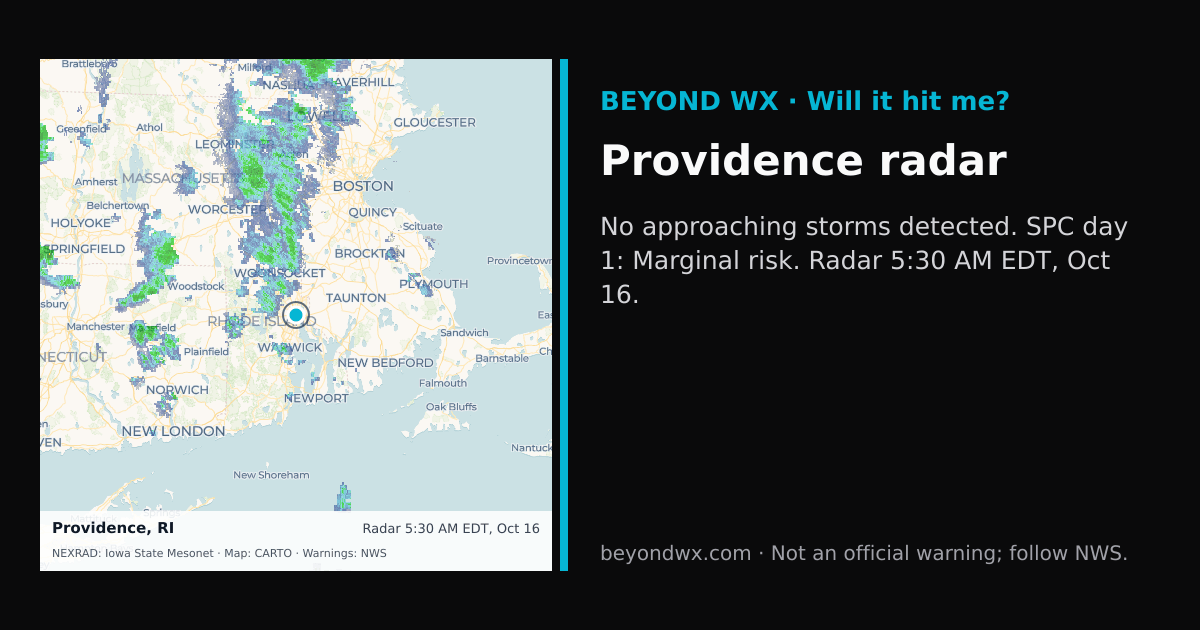
No rain expected in the next 2 hours.
No storms on track toward Providence right now.
Hourly NWS forecast and radar storm motion. Times are local. Not an official warning; follow NWS.
Share: storm card image · live radar
Providence, RI, experiences a humid continental climate characterized by cold winters and warm summers. The city sees four distinct seasons, with significant variation in temperature and weather patterns throughout the year. Located in the northeastern United States, Providence's climate is heavily influenced by its proximity to the Atlantic Ocean.
In the summer months, temperatures in Providence typically range from highs in the low 80s to lows in the mid-60s Fahrenheit. Winter temperatures often vary from highs in the upper 30s to lows in the low 20s. Spring and fall are transitional seasons; spring sees temperatures climbing from the 40s to the 60s, while fall experiences a decline from the 60s to the 40s.
Providence receives approximately 47 inches of precipitation annually, with November and December being the wettest months. The city averages around 35 inches of snow each winter, primarily from December through February. The driest period tends to be in the summer, particularly July, which also coincides with the warmest temperatures.
The region is susceptible to various weather phenomena, including nor'easters and occasional hurricanes or tropical storms, especially from late summer to early fall. While tornadoes are rare, they can occur. The city's coastal location moderates temperature extremes but also exposes it to marine influences, such as higher humidity and occasional coastal flooding.
Providence's geography, with its coastal plain setting and relatively low elevation, influences its weather patterns by allowing oceanic effects to moderate temperatures and contribute to humidity, while also making it vulnerable to storm surges during significant weather events.