60°F
Periods Of Rain
Data: NOAA/National Weather Service. Forecast updated Oct 16, 2026, 7:57 AM UTC. Discussion issued Oct 16, 2026, 12:11 AM UTC.
Air Quality Index: 23 (Good)
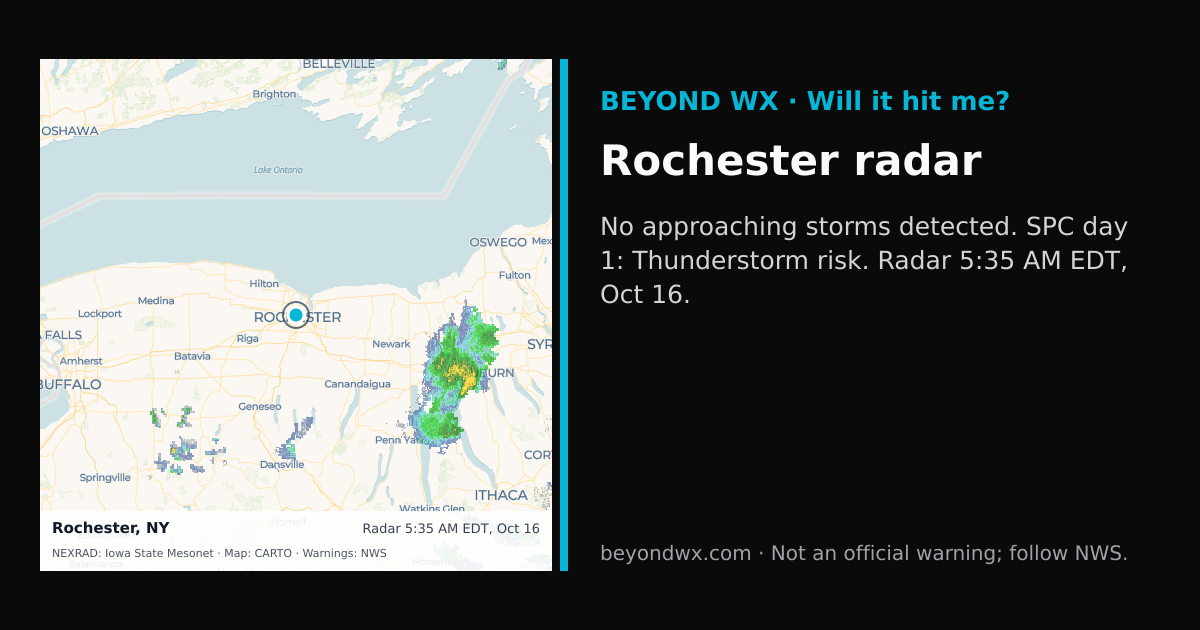
SPC Convective Outlook: Thunderstorm Risk
Rain likely now and through the next 2 hours.
Hourly NWS forecast and radar storm motion. Times are local. Not an official warning; follow NWS.
Share: storm card image · live radar
Rochester, NY, classified as having a humid continental climate, experiences a wide range of temperatures and significant precipitation throughout the year. The area is characterized by cold, snowy winters and warm, humid summers, with four distinct seasons. Located in the northeastern United States, it experiences climate influences from the Great Lakes, particularly Lake Ontario.
In the winter, typical high temperatures range from 30°F to 35°F, with lows often dipping into the teens. Summers are mild to warm, with highs averaging between 75°F and 85°F and lows around 60°F. Spring and fall are transitional seasons, with spring seeing gradual warming and fall bringing cooler temperatures and vibrant foliage.
Rochester receives about 34 inches of rainfall annually. The wettest months are typically June through September, while February and March are often the driest. Lake effect snow is a notable feature of Rochester's winter, with annual snowfall averaging around 100 inches, heavily influenced by cold air moving over Lake Ontario.
Lake effect snow, caused by cold air passing over the relatively warmer waters of Lake Ontario, is a significant weather phenomenon in the region, leading to heavy snowfall and sometimes challenging travel conditions. The city's proximity to the lake moderates temperature extremes but contributes to higher humidity and precipitation levels. Rochester's elevation of approximately 500 feet above sea level also plays a role in its climate, though it is not a major factor compared to lake influences.