56°F
Partly Cloudy
Data: NOAA/National Weather Service. Forecast updated Oct 16, 2026, 6:26 AM UTC. Discussion issued Oct 16, 2026, 2:51 AM UTC.
Air Quality Index: 56 (Moderate)
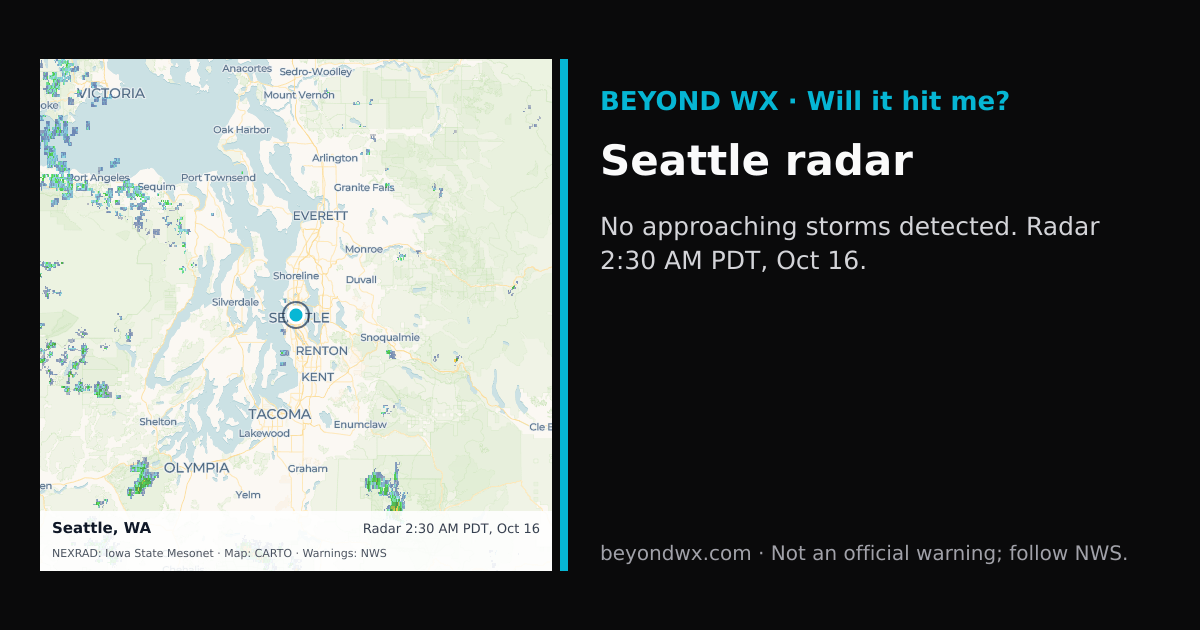
No rain expected in the next 2 hours.
No storms on track toward Seattle right now.
Hourly NWS forecast and radar storm motion. Times are local. Not an official warning; follow NWS.
Share: storm card image · live radar
Seattle, Washington, has a temperate maritime climate, classified as oceanic (Cfb) under the Köppen climate classification. This type of climate is characterized by mild, wet winters and cool, dry summers, largely influenced by its proximity to the Pacific Ocean. The moderating effects of the ocean keep temperature extremes rare.
In summer, Seattle experiences average high temperatures around 75°F and lows around 56°F. Winter temperatures are typically mild, with highs averaging 47°F and lows around 36°F. Spring and fall are transitional seasons, with spring temperatures ranging from 40°F to 60°F and fall temperatures often between 45°F and 65°F.
Seattle receives about 37 inches of precipitation annually, with the wettest months being November through January, when heavy rain is common. The driest period occurs from June to September. Snowfall is infrequent but possible, averaging only about 5 inches per year, concentrated in the winter months.
Notable weather phenomena in Seattle include persistent cloud cover and frequent rainfall during the cooler months. The region is not typically subject to extreme weather events like tornadoes or hurricanes, but it can experience occasional windstorms and atmospheric rivers, which can bring heavy rainfall and flooding.
Seattle's climate is heavily influenced by its location between the Pacific Ocean and the Cascade Mountain Range. The city's elevation is relatively low, at around 175 feet above sea level, but the nearby mountains can create a rain shadow effect, leading to varying precipitation patterns across the region.