46°F
Rain Showers Likely
Data: NOAA/National Weather Service. Forecast updated Oct 16, 2026, 8:27 AM UTC. Discussion issued Oct 16, 2026, 5:28 AM UTC.
Air Quality Index: 24 (Good)
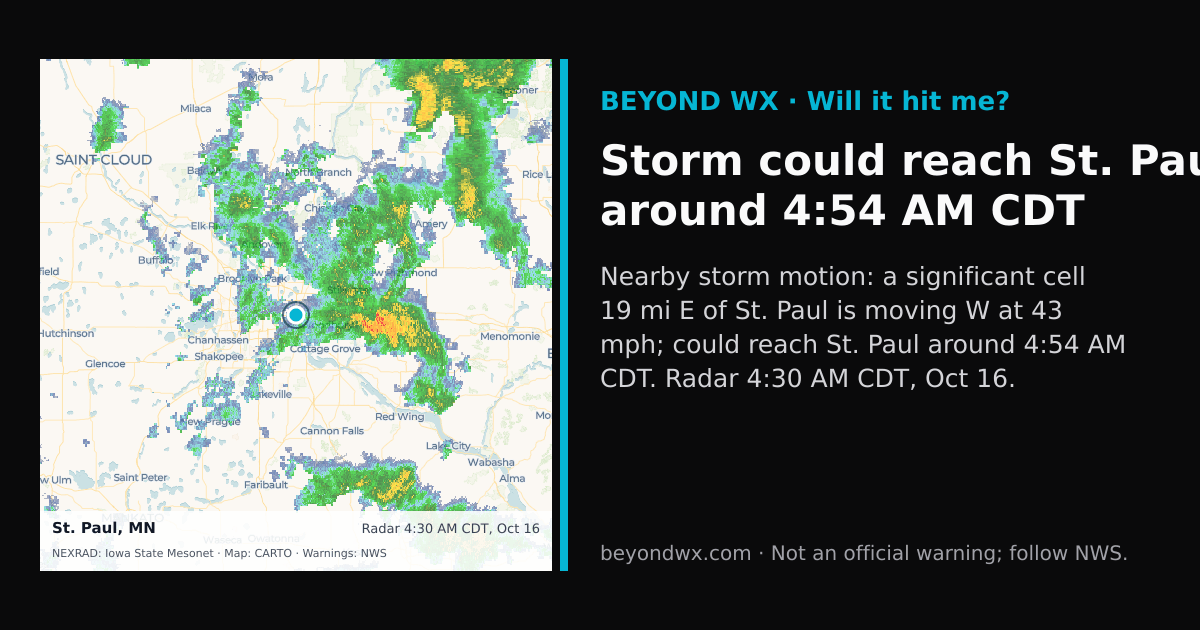
Rain likely now and through the next 2 hours.
Hourly NWS forecast and radar storm motion. Times are local. Not an official warning; follow NWS.
Share: storm card image · live radar
St. Paul, MN, has a humid continental climate characterized by cold winters and warm, humid summers. This climate classification signifies a wide range of temperatures across the seasons, with distinct seasonal changes. The city's location in the Upper Midwest of the United States contributes to this marked variability.
In the summer, St. Paul experiences average high temperatures in the low to mid-80s°F, while nighttime lows usually fall into the low 60s°F. Winter is quite harsh, with average highs in the mid-20s°F and lows that often drop into the single digits. Spring and fall are transitional seasons with mild and highly variable weather, seeing temperatures range from the 30s°F to the 60s°F.
Annual precipitation in St. Paul averages around 32 inches, with June typically being the wettest month. Snowfall is a significant feature of the winter season, with the city receiving around 50 inches of snow annually. The snowiest months are December through February, contributing to challenging winter conditions.
St. Paul is situated in a region susceptible to various weather phenomena, such as occasional severe thunderstorms and tornadoes during the warmer months. Ice storms and blizzards are common winter hazards. Although not located in the core of Tornado Alley, the area can experience tornado activity.
The city is positioned near the Mississippi River and is relatively flat, with an elevation of approximately 800 feet above sea level. This geographic setting, combined with its mid-latitude location, influences its pronounced seasonal climate, contributing to the significant temperature swings and distinct weather patterns experienced throughout the year.